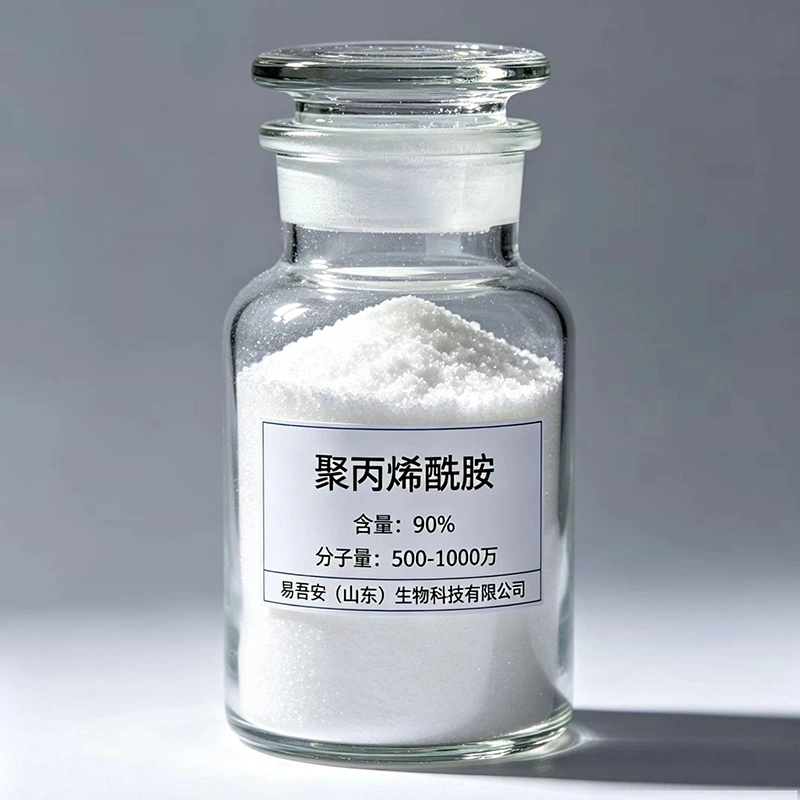


Article Summary: Cationic polyacrylamide is widely used for organic wastewater treatment and sludge dewatering because its positively charged polymer chains can interact with negatively charged suspended solids and colloids. Ewooan provides adjustable cationic products designed for different wastewater characteristics, with molecular weights of 6–12 million Daltons, cationic degrees of 10%–70%, solid content of ≥88%, and a reported operating pH range of 1–14. Understanding its working mechanism, selection factors, applications, and handling requirements can help industrial users improve solid-liquid separation and optimize chemical consumption.
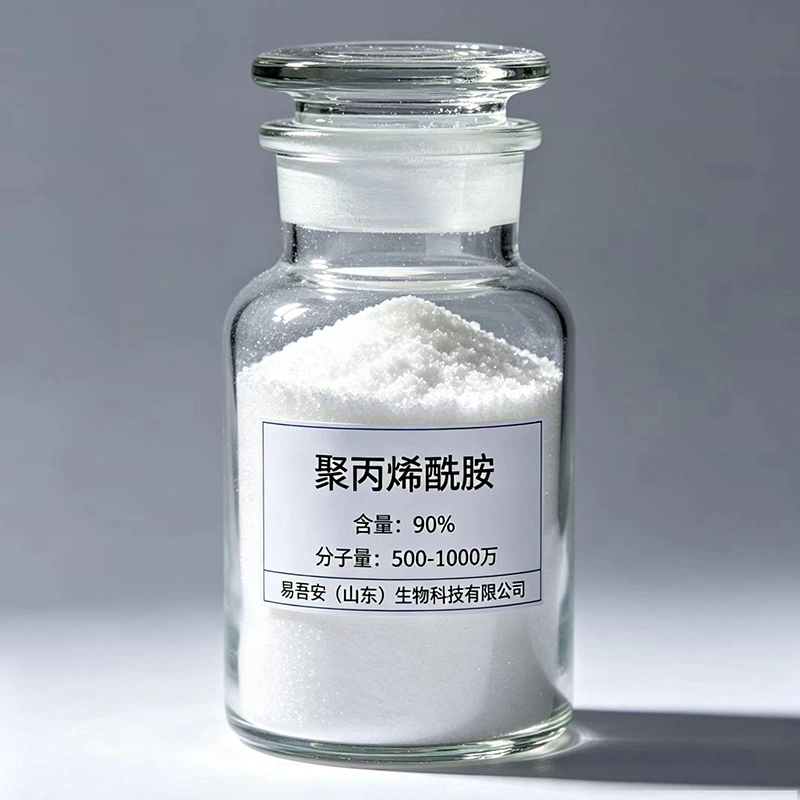
Table of Contents
- What Is Cationic Polyacrylamide and How Does It Work?
- What Are the Key Specifications to Consider?
- How Does CPAM Improve Flocculation Performance?
- Which Industries Can Use Cationic Polyacrylamide?
- How Should an Industrial Flocculant Be Selected?
- What Operational Benefits Can It Provide?
- Frequently Asked Questions
- Conclusion
What Is Cationic Polyacrylamide and How Does It Work?
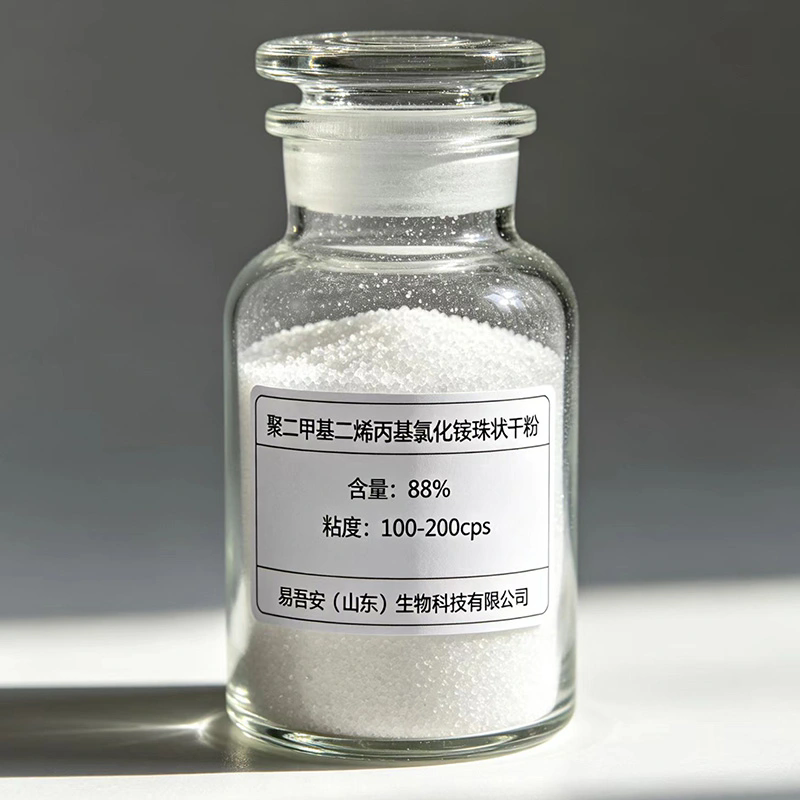
Cationic Polyacrylamide Industrial Flocculant is a water-soluble polymer commonly used to aggregate fine suspended particles, organic colloids, and sludge solids during wastewater treatment. Ewooan describes its CPAM as a linear polymer produced through the copolymerization of acrylamide and cationic monomers, available as a white or slightly yellow powder or granules.
The defining characteristic of cationic polyacrylamide is its positively charged molecular structure. Many particles found in municipal and industrial wastewater have negatively charged surfaces. When CPAM is introduced under suitable process conditions, its cationic groups can adsorb onto these particles, reduce electrostatic repulsion, and encourage them to form larger aggregates.
The resulting flocs are easier to separate through sedimentation, filtration, centrifugation, belt pressing, or filter-press dewatering. This makes CPAM particularly relevant to applications where wastewater contains substantial organic matter or where sludge needs to be converted into a more manageable dewatered cake.
What Are the Key Specifications to Consider?
Flocculant performance depends on more than the chemical name alone. Molecular weight, cationic degree, solid content, wastewater chemistry, sludge characteristics, and equipment configuration should all be considered before selecting a grade.
| Parameter | Ewooan CPAM Range | Why It Matters |
|---|---|---|
| Cationic Degree | 10%–70% | Helps match polymer charge to different wastewater and sludge characteristics. |
| Molecular Weight | 6–12 million Daltons | Influences adsorption, bridging, floc size, and mechanical stability. |
| Solid Content | ≥88% | Indicates the concentration of active material in the supplied product. |
| Reported pH Adaptability | 1–14 | Provides flexibility for different acidic, neutral, and alkaline process conditions. |
| Physical Form | Powder or granules | Supports practical transportation, storage, and preparation requirements. |
According to Ewooan's product information, its CPAM range combines adjustable cationic charge with different molecular-weight options so that users can match the polymer to specific water and sludge conditions rather than relying on a single universal grade.
How Does CPAM Improve Flocculation Performance?
The effectiveness of cationic polyacrylamide comes from several related mechanisms rather than a single chemical action.
1. Electrostatic Charge Neutralization
Fine colloidal particles often remain dispersed because particles with similar surface charges repel each other. The positively charged sections of CPAM can interact with negatively charged particles, reducing this repulsive force and helping destabilize the suspension.
2. Polymer Adsorption and Bridging
The long polymer chains can attach to multiple particles at the same time. This creates a bridging effect in which individual suspended particles become connected into larger aggregates. Molecular weight therefore becomes an important consideration when designing a flocculation process.
3. Formation of Dense, Stable Flocs
A well-selected polymer can produce flocs that are sufficiently large and mechanically stable for downstream separation. For sludge dewatering, stable flocs are particularly important because excessive floc breakage can reduce filtration efficiency and increase solids carryover.
4. Compatibility With Mechanical Dewatering
CPAM can be used upstream of equipment such as belt filter presses, centrifuges, and plate-and-frame or chamber filter presses. Ewooan states that its product is designed to generate large flocs that resist dispersion during filter-press operation and can support sludge cake moisture levels below 80% under suitable process conditions.
Which Industries Can Use Cationic Polyacrylamide?
Cationic polyacrylamide is particularly useful where wastewater or sludge contains negatively charged organic substances and where efficient solid-liquid separation is required. Typical industrial application areas include:
- Municipal wastewater: sludge conditioning and mechanical dewatering.
- Paper manufacturing: treatment of paper mill wastewater and sludge.
- Textile and dyeing: treatment of wastewater containing organic colloids and suspended solids.
- Food processing: separation of organic solids from process wastewater.
- Fermentation: conditioning and separation of biologically derived sludge.
- Seafood processing: treatment of wastewater with high organic loading.
- Mining and mineral processing: selected applications requiring polymer-assisted solid-liquid separation.
- Oilfield operations: selected wastewater and sludge treatment processes.
The appropriate grade should still be determined through wastewater characterization and laboratory or pilot testing. Industry type alone does not determine the optimum cationic charge or molecular weight.
How Should an Industrial Flocculant Be Selected?
Selecting a flocculant solely by price or polymer name can lead to inconsistent treatment results. A more reliable approach considers the actual wastewater chemistry and separation equipment.
- Analyze the wastewater or sludge: Consider suspended solids, organic content, pH, ionic strength, and sludge concentration.
- Determine the required charge density: Higher or lower cationic degrees may be appropriate depending on particle charge and organic content.
- Evaluate molecular weight: Molecular weight affects polymer chain length, adsorption, and bridging behavior.
- Conduct jar or laboratory tests: Compare floc size, settling behavior, filtrate clarity, and dewatering performance.
- Test under actual equipment conditions: A polymer that performs well in a beaker may behave differently in a centrifuge, belt press, or filter press.
- Optimize dosage: Excessive dosage does not necessarily produce better flocculation and can increase chemical consumption or interfere with downstream separation.
Ewooan states that its technical team can provide sample testing and product recommendations based on wastewater parameters. This type of application-specific evaluation can help buyers move from a generic chemical specification toward a more practical treatment solution.
What Operational Benefits Can It Provide?
When correctly matched with wastewater characteristics and process equipment, CPAM can contribute to several measurable operational objectives:
| Operational Objective | Potential Contribution of CPAM |
|---|---|
| Faster Solid-Liquid Separation | Larger flocs can improve settling and filtration behavior. |
| Improved Sludge Dewatering | Stable flocs can facilitate mechanical water removal. |
| Better Filter Performance | Appropriately conditioned sludge can reduce floc dispersion during filtration. |
| Flexible Formulation Selection | Adjustable cationic degree and molecular weight allow application-specific matching. |
| Supply and Storage Convenience | Powder or granular products can simplify transportation and long-term inventory management. |
For industrial buyers, product consistency is also important. Ewooan reports an annual polymer production capacity of 20,000 tons and a complete manufacturing chain extending from cationic monomer synthesis to polymer production. Its website also states that batches undergo quality testing before shipment.
Frequently Asked Questions
What is the main purpose of cationic polyacrylamide?
Its primary purpose is to promote aggregation of negatively charged suspended particles and organic colloids, making them easier to separate from water. It is widely used for wastewater treatment and sludge conditioning.
What cationic degree is suitable for industrial wastewater?
There is no universal optimum. Ewooan offers a cationic degree from 10% to 70%, allowing selection according to wastewater chemistry, sludge characteristics, and treatment objectives. Laboratory testing is recommended before large-scale use.
What molecular weight does the product have?
The referenced Ewooan product has a molecular-weight range of 6–12 million Daltons. Different molecular-weight levels can provide different adsorption and bridging characteristics.
Can CPAM be used for sludge dewatering?
Yes. CPAM is commonly used to condition municipal, paper mill, and industrial sludge before mechanical dewatering. It can be integrated with belt filter presses, centrifuges, and filter presses.
How should cationic polyacrylamide be stored?
Ewooan recommends keeping the product sealed in a cool, dry, and well-ventilated area and avoiding temperatures above 40°C. The listed shelf life is approximately 1–2 years under suitable storage conditions.
Does Ewooan provide samples for testing?
Yes. Ewooan states that test samples are available for its cationic monomer and polymer products, allowing buyers to evaluate performance before committing to bulk procurement.
Conclusion
Cationic polyacrylamide can be an important process chemical for industrial wastewater treatment and sludge dewatering because its positive charge, long polymer chains, and adsorption-bridging behavior help convert fine suspended particles into separable flocs. The most important selection factors include cationic degree, molecular weight, wastewater chemistry, dosage, and dewatering equipment. For buyers seeking an application-specific CPAM solution, Ewooan offers adjustable specifications, sample testing, customized product support, and factory-direct supply. If you are evaluating a suitable grade for your wastewater or sludge treatment process, learn more about Cationic Polyacrylamide Industrial Flocculant or contact us with your water-quality parameters, treatment capacity, target dosage, and equipment details for a tailored recommendation.