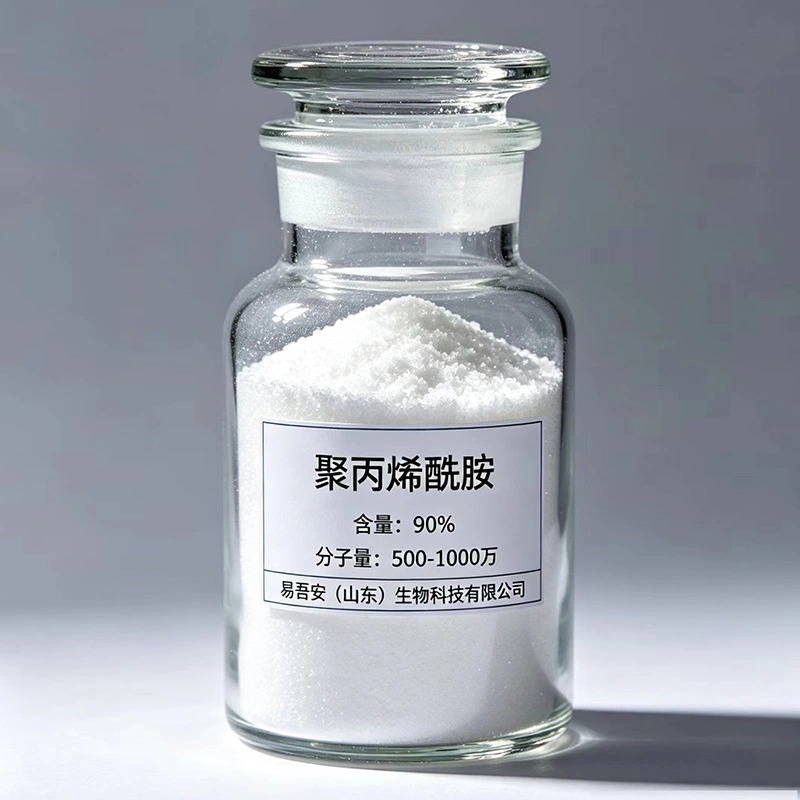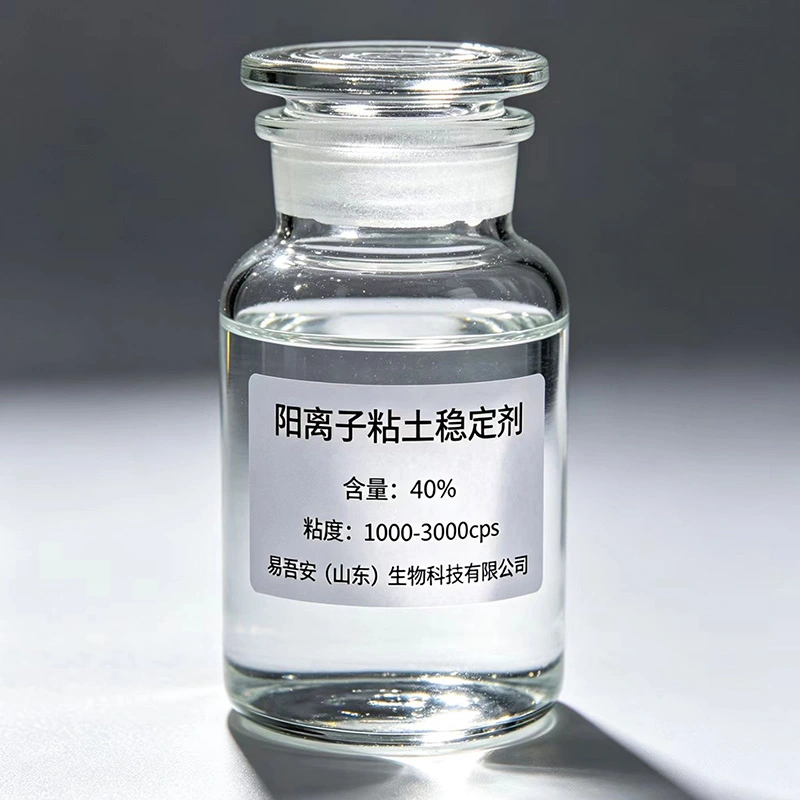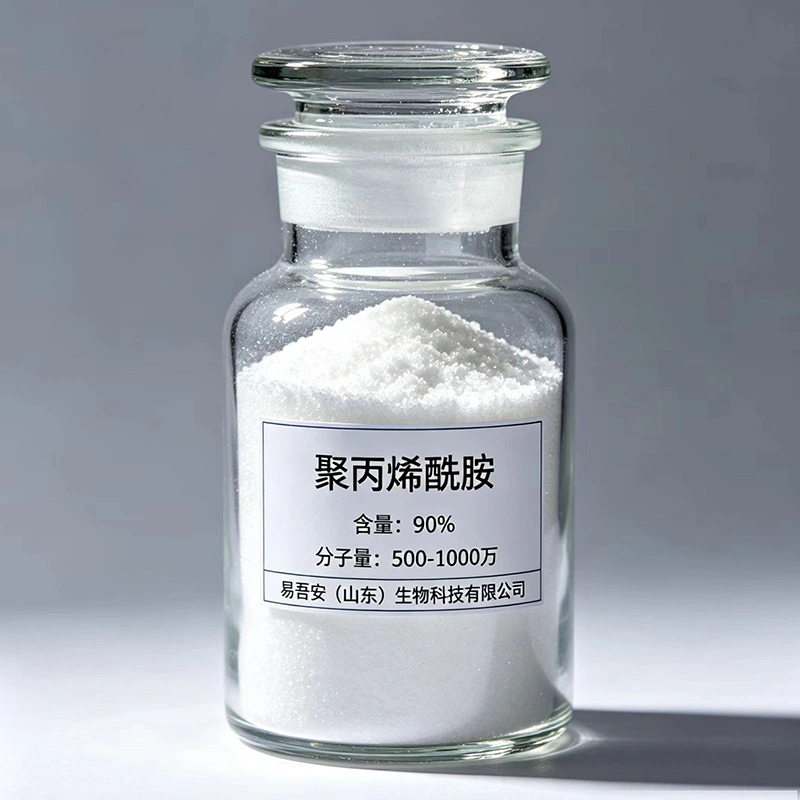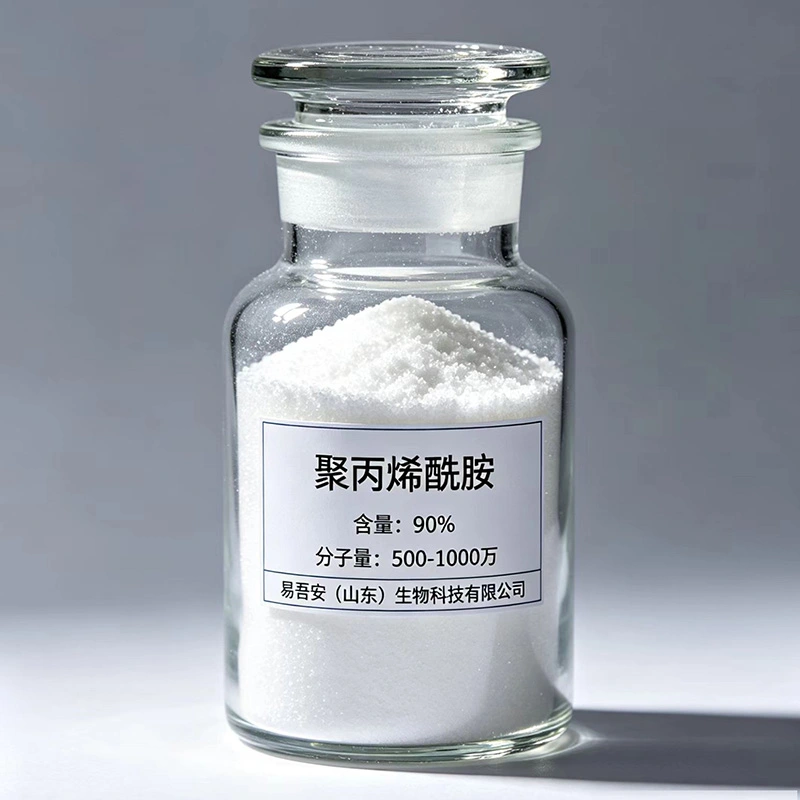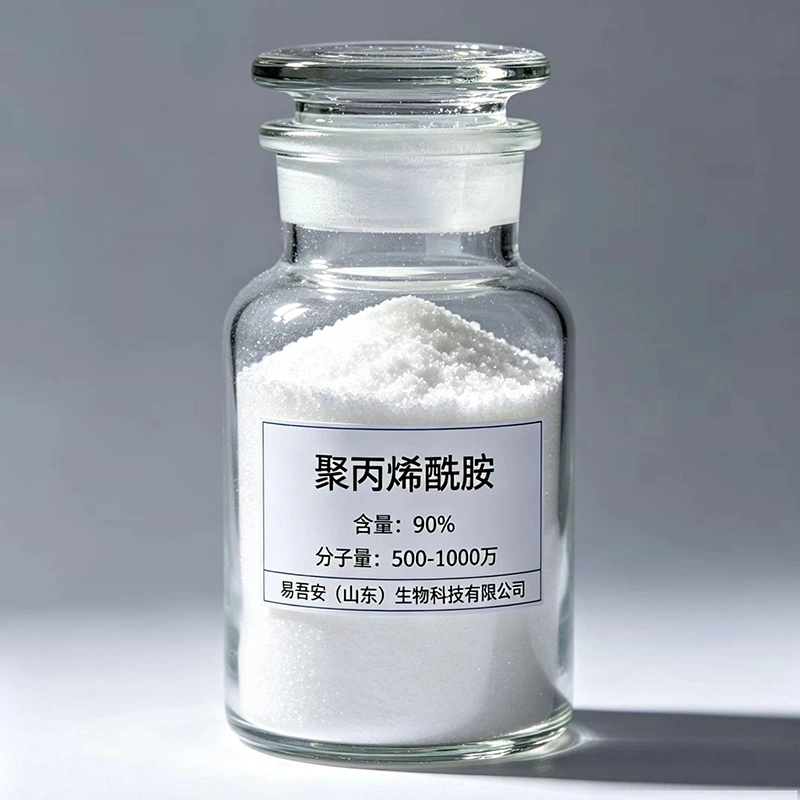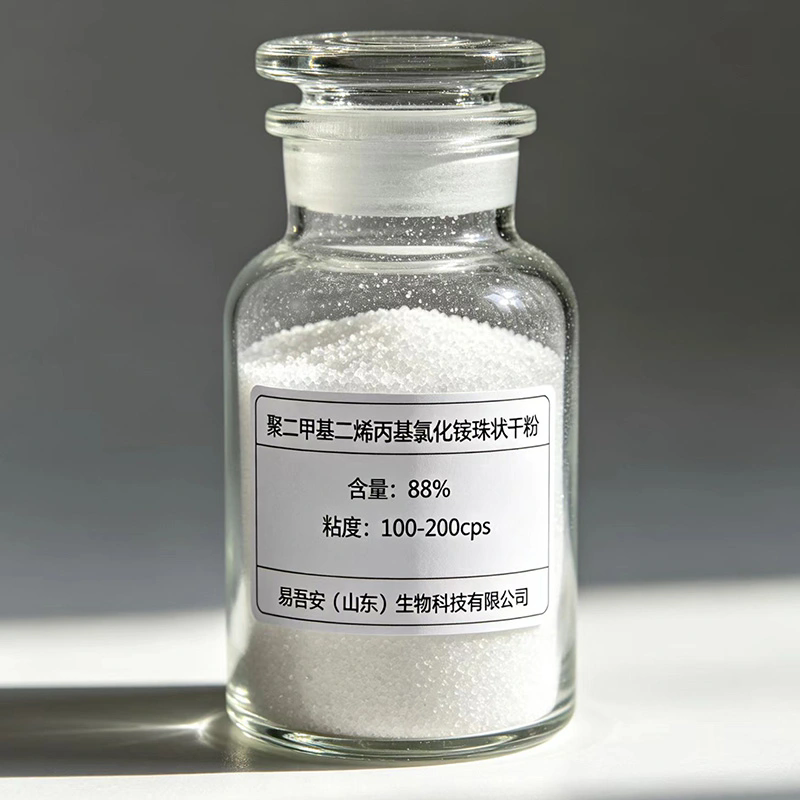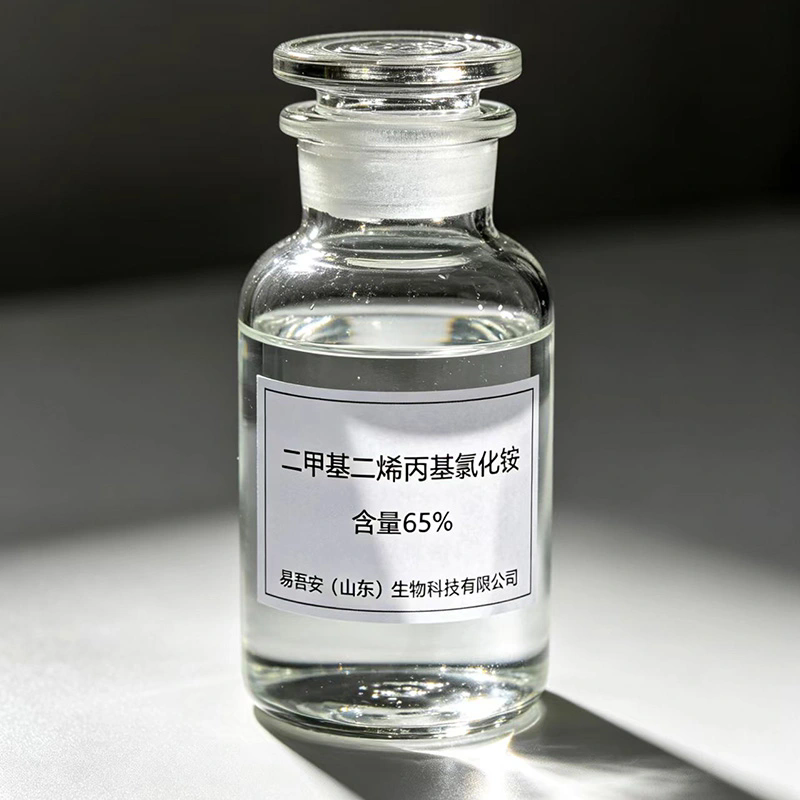
We offer a comprehensive portfolio including DMDAAC, PDMDAAC (liquid and exclusive bead/powder forms), and Polyacrylamide (PAM) series, with an annual production capacity of over 50,000 tons to meet diverse industrial needs.
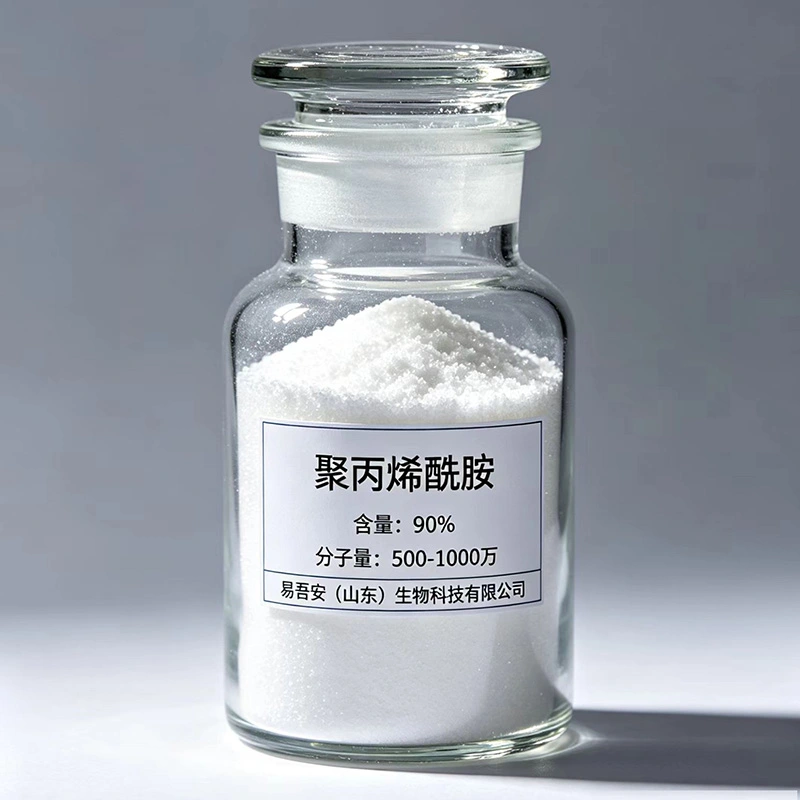
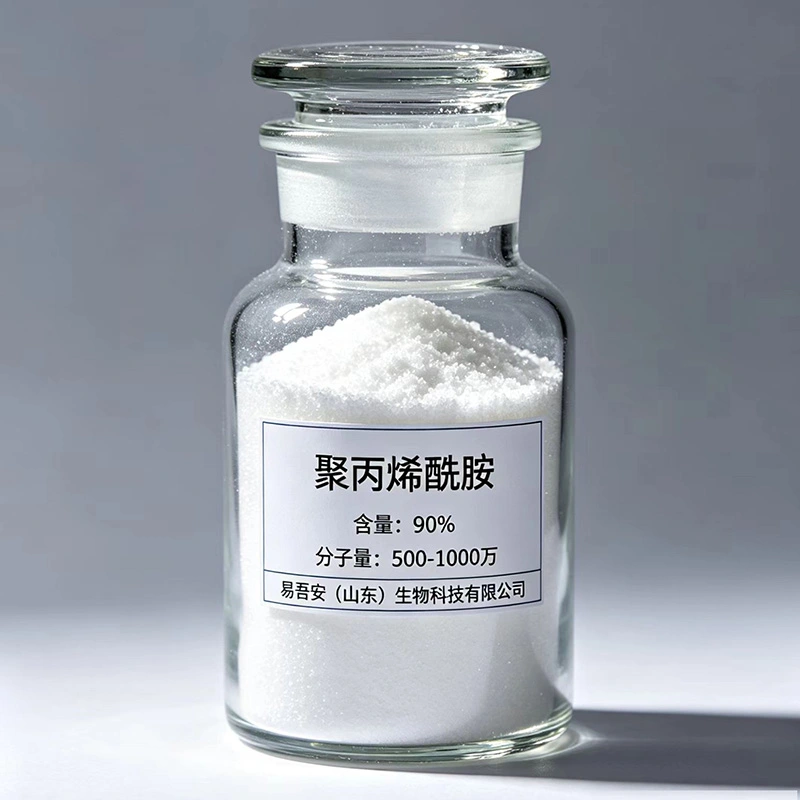
Cationic Polyacrylamide Industrial Flocculant (CPAM, CAS No. 9003-05-8) is a water-soluble linear polymer formed by the copolymerization of acrylamide and cationic monomers. This product appears as a white or slightly yellow, free-flowing powder or granules, with a solid content of ≥88%, a molecular weight range of 6 million to 12 million, and a cationic degree that can be precisely controlled within the range of 10%--70%.
The CPAM molecular chain carries a large number of positive charges (quaternary ammonium groups) and exhibits the characteristics of a polymeric electrolyte in neutral to acidic aqueous solutions. Since colloidal particles and organic matter in most wastewater carry a negative charge, CPAM can efficiently aggregate these negatively charged colloids and suspended particles into large, compact flocs through a dual mechanism of electrostatic neutralization and adsorption bridging, thereby enabling rapid sedimentation and solid-liquid separation. This product is particularly suitable for the dewatering treatment of municipal wastewater, municipal sludge, paper mill sludge, and other industrial sludges.
• Strong cationic properties, precisely matched to negatively charged organic colloids
• Molecular weight of 6 million--12 million, with extremely strong adsorption and cross-linking capabilities
• Adjustable cationicity of 10%--70%, precisely tailored to different water qualities
• Solid content ≥88%, high concentration of active ingredients, and low shipping costs
• Effective pH range of 1--14, suitable for various acidic and alkaline operating conditions
• Available in powder or granular form, with a long shelf life, stable storage, and convenient transportation
• Large flocs that do not stick to filter cloth, do not disperse during filter press operation, and deliver industry-leading dewatering efficiency
Advantage 1: Precise Charge Matching for Exceptional Performance in Organic Wastewater Treatment
Suspended particles, colloidal substances, and microbial cells in most industrial wastewater and municipal sewage carry a negative charge. Traditional inorganic flocculants (such as polyaluminum chloride and aluminum sulfate) rely on charge neutralization and sedimentation-adsorption, resulting in limited treatment efficiency, high dosage requirements, and high sludge production.
CPAM's molecular chains contain quaternary ammonium cationic groups (-N⁺(CH₃)₃), which can efficiently adsorb negatively charged organic colloids and suspended particles through electrostatic attraction. Through the dual action of charge neutralization and adsorption bridging, it rapidly aggregates tiny particles into large, compact flocs, enabling rapid settling and efficient solid-liquid separation.
Cationic Polyacrylamide Industrial Flocculant is particularly suitable for treating wastewater with high organic colloid content in industries such as dyeing, papermaking, food processing, metallurgy, mineral processing, oil fields, seafood processing, and fermentation.
Solving Your Challenges: Poor organic wastewater treatment results, effluent COD and suspended solids failing to meet standards—Cationic Polyacrylamide's precise charge matching ensures that every drop of wastewater is efficiently purified.
Advantage 2: The Preferred Solution for Sludge Dewatering, Delivering Industry-Leading Efficiency and High Sludge Cake Dryness
Cationic Polyacrylamide performs exceptionally well in sludge dewatering and is the optimal choice for treating municipal sludge, paper mill sludge, and other industrial sludges.
Adding CPAM before the sludge enters the filter press creates an ideal floc structure characterized by large flocs that do not stick to the filter cloth and do not disperse during filtration. The resulting dewatered sludge cake is thick, with a moisture content controllable below 80%, and the dewatering efficiency is significantly higher than that of other types of flocculants.
Advantage 3: Precisely Adjustable Ionic Charge and Molecular Weight—One Product for Multiple Applications
Cationic Polyacrylamide Industrial Flocculant differs from "one-size-fits-all" generic products. By adjusting the cationic charge (10%--70%) and molecular weight (6 million--12 million), it can be precisely tailored to different water qualities and sludge characteristics.
• High cationic charge (40%--70%) + medium-to-low molecular weight: Suitable for sludge with high organic content and high charge density (e.g., municipal wastewater activated sludge, food industry wastewater sludge), offering strong charge neutralization capabilities
• Medium-to-low ionic strength (10%--40%) + high molecular weight: Suitable for sludge with high solids content and moderate organic matter content (e.g., paper mill sludge, textile dyeing sludge), with outstanding bridging flocculation effects
• Combinations of different ionic strengths and molecular weights are compatible with various dewatering equipment, including belt filter presses, centrifugal dewatering machines, and plate-and-frame filter presses
Solving Your Pain Points: Different water qualities require different product types, making selection difficult—the precise adjustability of Cationic Polyacrylamide allows a single product family to cover all application scenarios, simplifying procurement and ensuring precise matching.
The mechanism of action of Cationic Polyacrylamide is clear and well-defined, involving the synergistic interaction of multiple mechanisms:
First Layer: Charge Neutralization (Core Mechanism)
The surfaces of colloidal particles, organic matter, and microbial cells in most wastewater carry a negative charge. The quaternary ammonium cationic groups on the CPAM molecular chains carry a positive charge, enabling them to rapidly adsorb to the surfaces of these negatively charged particles through electrostatic attraction. This neutralizes the surface charge, reduces the electrostatic repulsion between particles, and destabilizes the fine particles, causing them to flocculate.
Second Layer: Adsorption and Bridging
CPAM molecular chains are extremely long (molecular weight 6 million--12 million) and contain a large number of active adsorption sites. A single polymer chain can simultaneously adsorb multiple suspended particles, acting like a "bridge" to connect fine particles into large, dense flocs. This bridging action makes the flocs more stable and shear-resistant, enabling them to withstand the mechanical forces encountered during dewatering operations.
Third Layer: Floc Optimization
Flocs formed by Cationic Polyacrylamide exhibit excellent characteristics: they are large, dense, do not stick to filter cloth, and do not disperse during filter press operation. These characteristics are particularly critical during mechanical dewatering—large flocs mean faster filtration rates, non-sticking to filter cloth means less frequent equipment cleaning, and no dispersion means a higher solids content in the sludge cake.
Fourth Layer: Broad-Spectrum pH Adaptability
Cationic Polyacrylamide Industrial Flocculant performs reliably across a pH range of 1--14. Whether treating acidic, neutral, or alkaline wastewater—there is no need for frequent pH adjustments; a single product adapts to a wide range of water qualities.
One product, four mechanisms—from charge neutralization to adsorption and bridging, and from floc optimization to broad-spectrum adaptability—comprehensively optimizing organic wastewater treatment and sludge dewatering performance.
• Packaging Specifications: 25 kg per bag (inner polyethylene plastic bag, outer laminated kraft paper bag)
• Storage Conditions: Store in a sealed container in a cool, dry, and well-ventilated area; avoid high temperatures (do not exceed 40°C)
• Shelf Life: 1--2 years
• Transportation: Non-flammable, non-explosive, and non-corrosive; may be transported as general chemical products
Address
Wanhong Plaza, Jinan City, Shandong Province, China
Tel