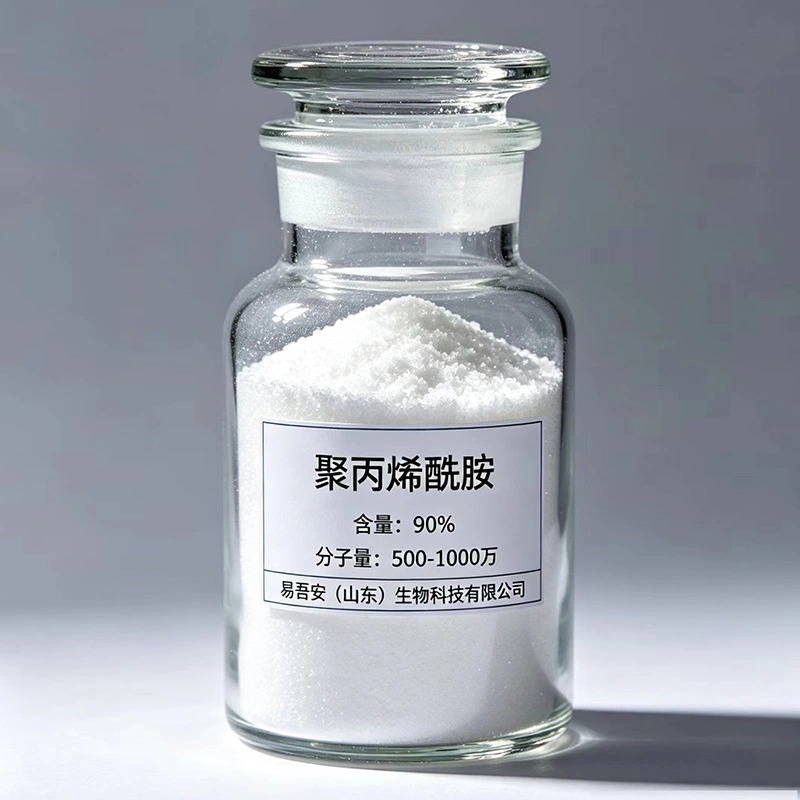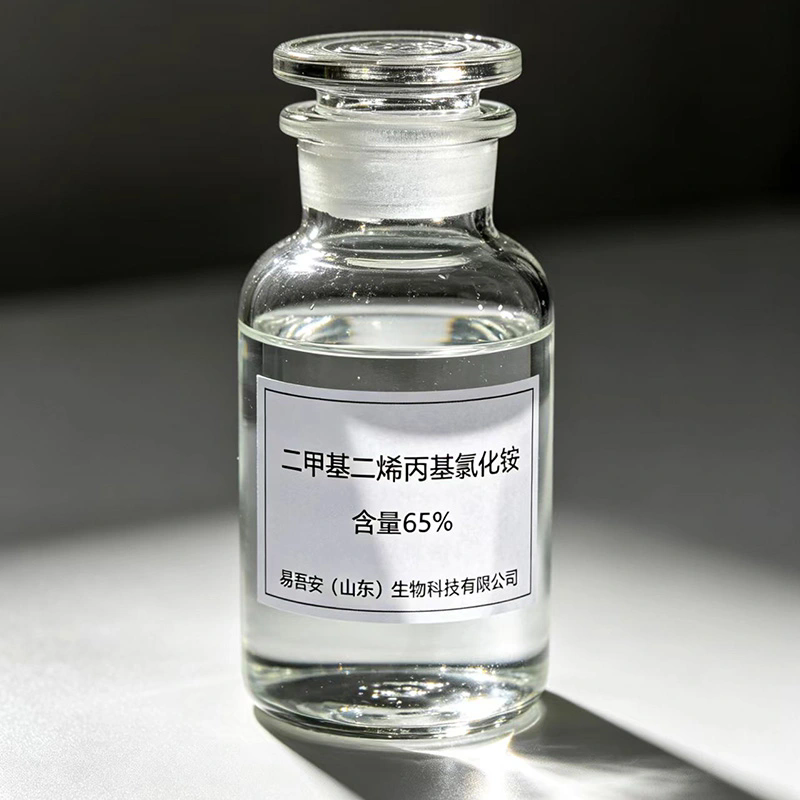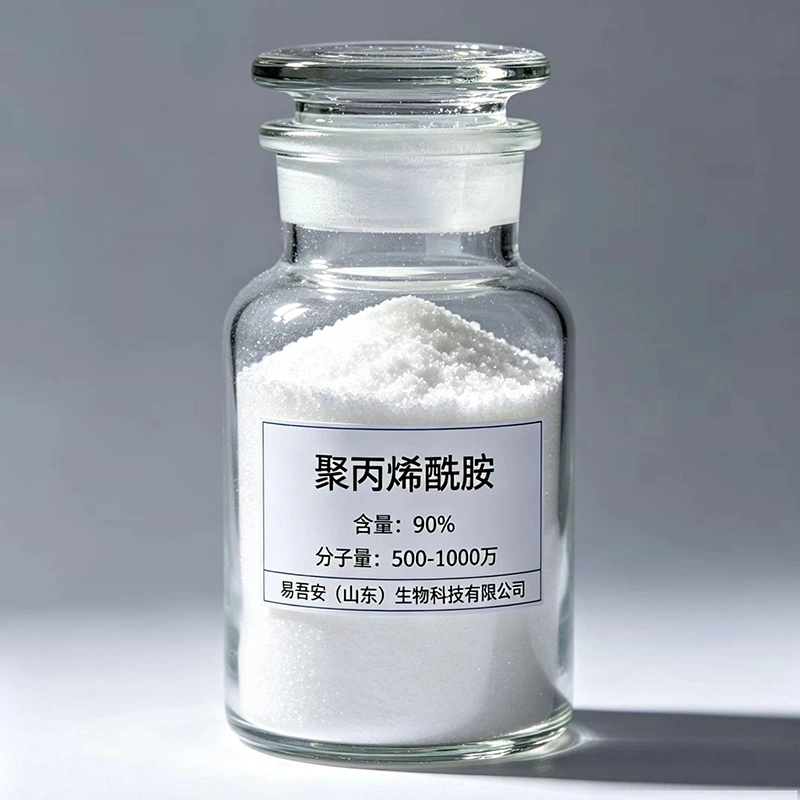
We offer a comprehensive portfolio including DMDAAC, PDMDAAC (liquid and exclusive bead/powder forms), and Polyacrylamide (PAM) series, with an annual production capacity of over 50,000 tons to meet diverse industrial needs.
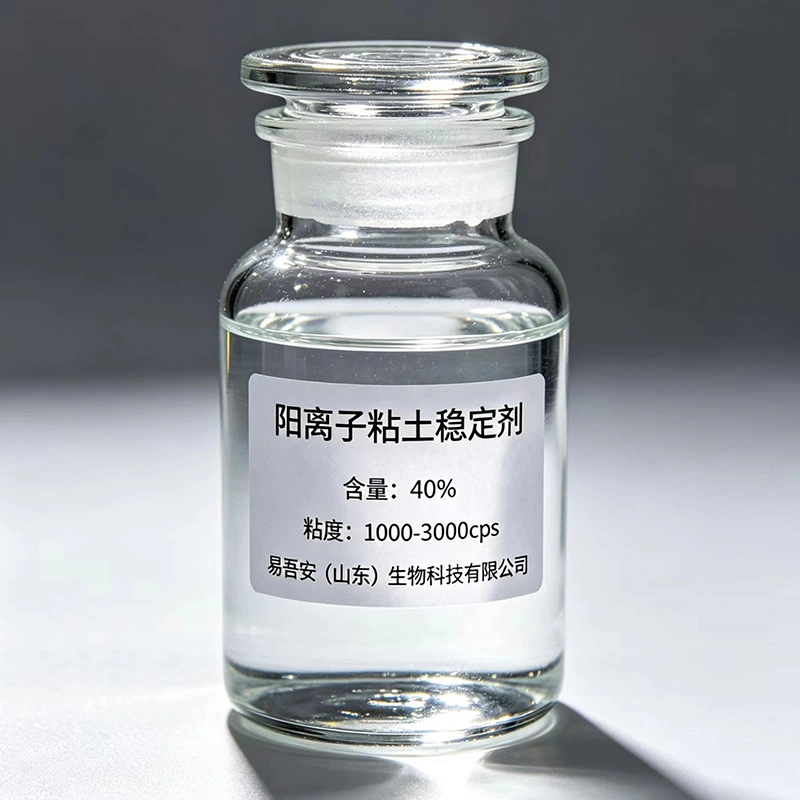
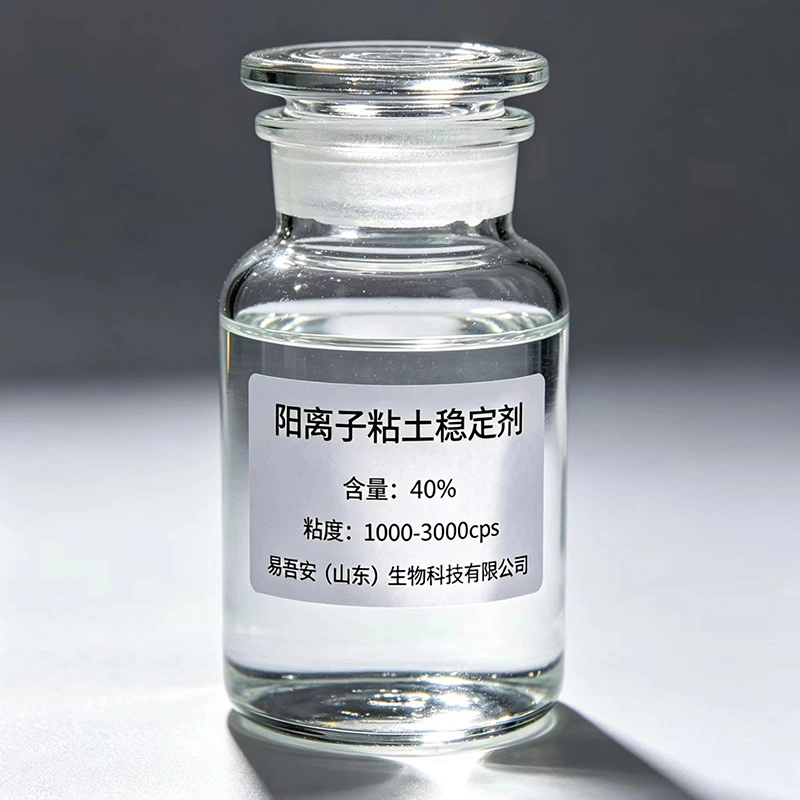
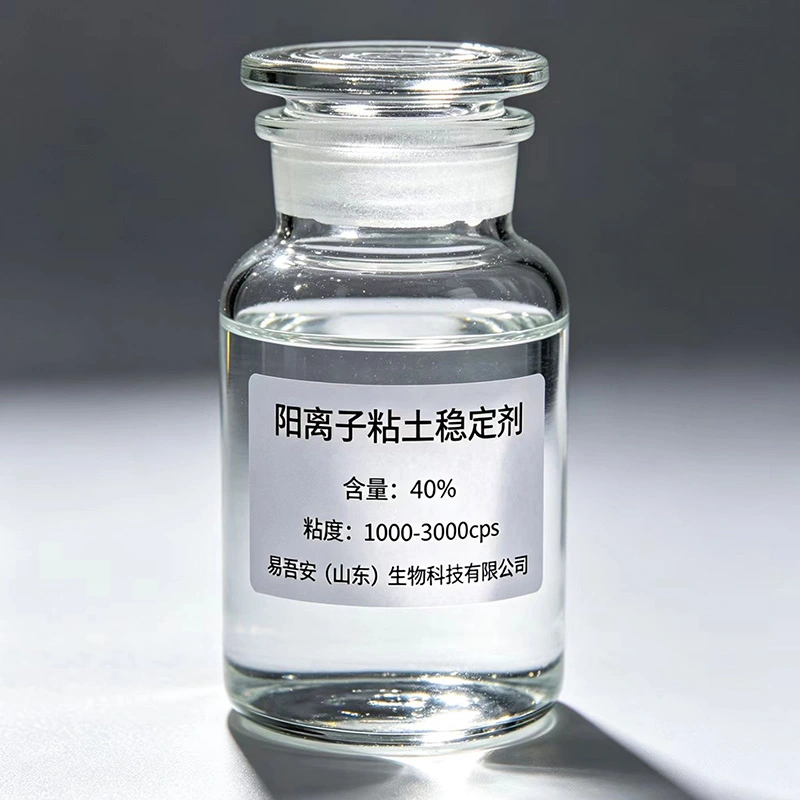
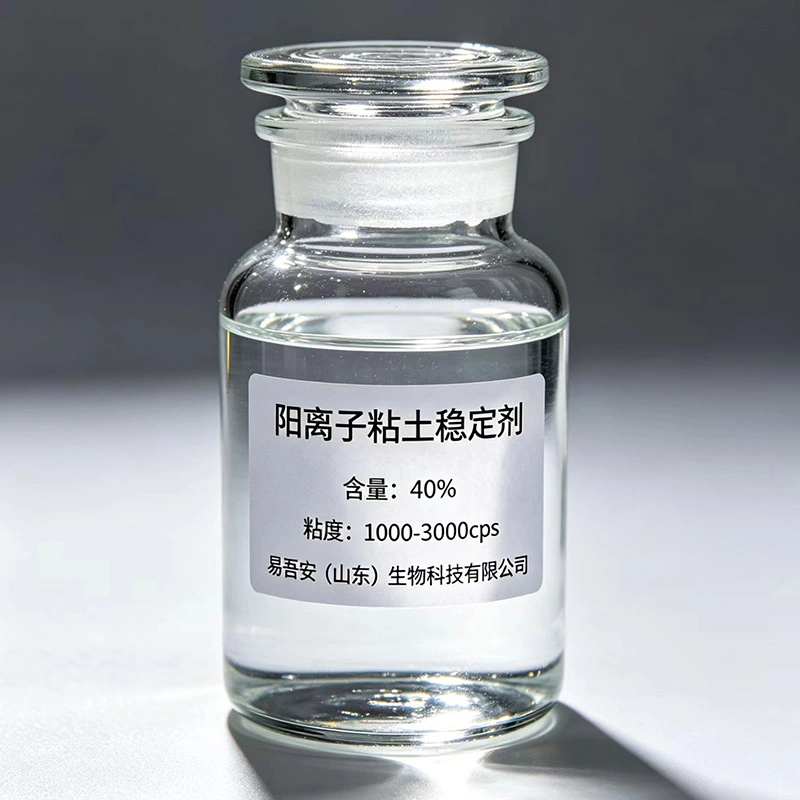
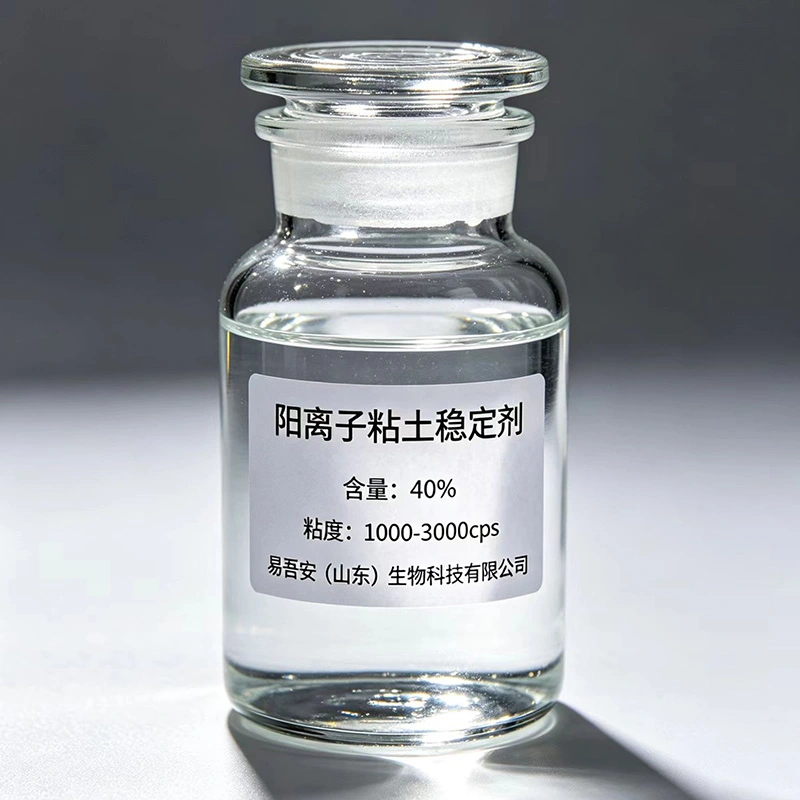
Cationic Clay Stabilizing Agent is a water-soluble, strongly cationic polyelectrolyte additive. It appears as a clear to pale yellow viscous liquid and possesses key properties such as safety and non-toxicity, rapid dissolution in cold water, high aqueous stability, and stability across a wide pH range.
Addressing common issues in oil and gas reservoirs—such as swelling clay minerals (e.g., montmorillonite) and dispersible shaly particles—the product utilizes multiple mechanisms, including charge neutralization, surface film formation, and intercalation-based sealing. It inhibits clay hydration, swelling, and migration at the source, effectively resolving industry challenges such as reduced reservoir permeability, pore throat plugging, increased water injection pressure, and crude oil production decline.
It is highly compatible with various acidizing and fracturing additives, possesses inherent bactericidal and anti-plugging properties, and resists fluid erosion and acid-alkali corrosion. Suitable for both high- and low-permeability reservoirs, it serves as a core reservoir protection additive for drilling, water injection, fracturing, and stimulation operations.
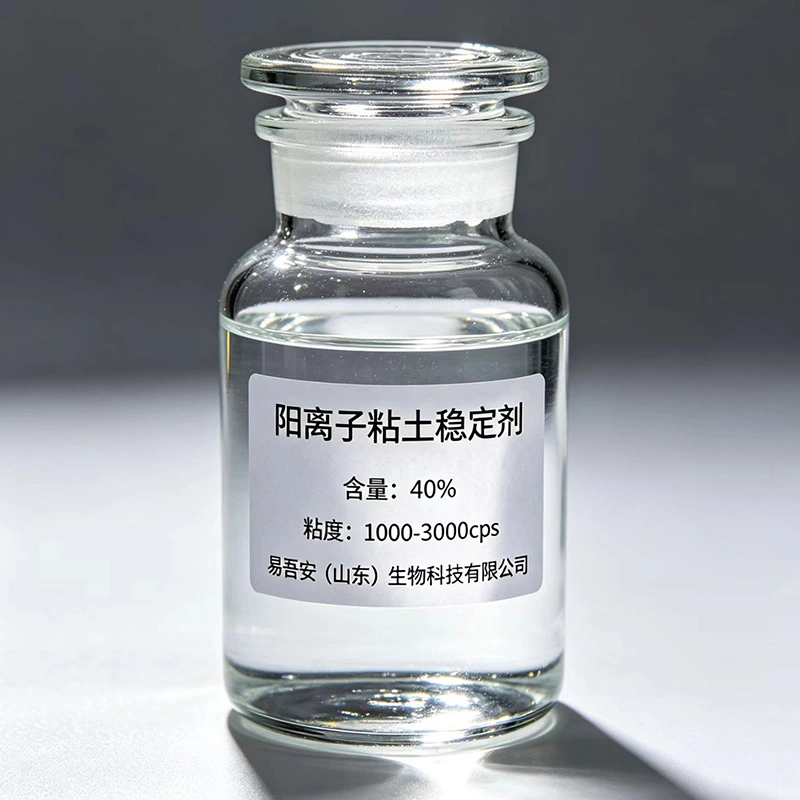
| Code | 343 | |
| Appearance | colorless to pale yellow viscose liquid | |
| Solid content, % | 40 ±1 | |
| PH | 5.0-7.0 | |
| Viscosity(25℃), cps | 1000-3000 | |
1.1 Basic Product Definition and Physicochemical Properties
The Cationic Clay Stabilizing Agent is a strongly cationic polymeric additive designed specifically for oilfield applications. Synthesized via a high-activity cationic polymerization process, it is free from impurities and causes no secondary pollution. The product exhibits excellent fluidity and water solubility; once formulated into a working fluid, it remains stable without phase separation or sedimentation. It is resistant to bacterial degradation, ensuring stable performance during long-term operations. It adapts to extreme pH environments and withstands fluid erosion and salinity fluctuations, thereby ensuring the long-term permeability of reservoir pores.
1.2 Charge Neutralization and Swelling Inhibition Mechanism
Clay minerals in oil and gas reservoirs typically carry a negative surface charge. Upon contact with water, they form a diffuse electric double layer, triggering lattice expansion and volumetric swelling, which directly reduces formation permeability. The product's molecules carry high-density cationic active groups that rapidly neutralize negative charges on clay surfaces and eliminate electrostatic repulsion between particles. By disrupting the fundamental conditions required for hydration-induced swelling, it inhibits clay water absorption and expansion at the source.
1.3 Surface Film-Forming and Sealing Mechanism
Upon adsorption onto clay mineral surfaces, the agent forms a dense, stable polymeric protective film that encapsulates clay particles and pore-wall rock formations. This film isolates the clay from water contact, blocking water molecules from penetrating the clay interlayers; this effectively prevents clay hydration, dispersion, and particle detachment, thereby stabilizing the reservoir's original pore structure.
1.4 Particle Locking and Migration Prevention Mechanism
To address issues where non-swelling clay minerals fragment due to fluid flow—leading to particle migration and pore-throat plugging—this product firmly adsorbs and locks fine clay particles in place. It prevents particles from migrating and accumulating with the fluid flow, effectively averting the clogging of reservoir pores and fractures, ensuring unobstructed flow channels, and extending water injection cycles.
2.1 Long-Lasting Swelling Inhibition
A core advantage of this Cationic Clay Stabilizing Agent is its durable swelling inhibition; its molecular chains anchor to clay surfaces at multiple points, ensuring high bonding strength and resistance to detachment. Measured swelling inhibition rates reach 85%--91.58%, significantly outperforming conventional short-acting stabilizers. A single treatment provides long-term reservoir protection without the need for frequent re-dosing, greatly simplifying field operations and maintenance.
2.2 Resistance to Fluid Scouring and Operational Stability
The cationic polymer forms chemical bonds with clay surfaces—rather than relying on simple physical adhesion—resulting in exceptional resistance to water washing and scouring. Even under high-velocity, high-volume flow conditions (such as water injection or fracturing), it maintains stable swelling inhibition and dispersion control without failing due to fluid impact, making it ideal for long-term water-injection oilfield development.
2.3 Excellent additive compatibility; suitable for various working fluid systems
It boasts exceptional compatibility, integrating seamlessly with conventional oilfield acidizing, fracturing, drilling fluid, and flowback additives. Mixed use results in no antagonism, phase separation, or loss of efficacy. It can be directly incorporated into existing working fluid formulations for batch application without requiring system adjustments, ensuring high field applicability.
2.4 Inherent bactericidal and anti-plugging properties; enhances quality and efficiency
The agent possesses inherent bactericidal and bacteriostatic properties, inhibiting the proliferation of formation bacteria and preventing pore plugging and reservoir contamination caused by bacterial metabolites. It also eliminates efficacy loss due to bacterial degradation of the chemical, ensuring the stable operation of systems throughout the drilling, water injection, and fracturing processes.
3.1 Inhibits shale hydration and disintegration; stabilizes wellbore structure
Shale formations, characterized by high clay content and well-developed bedding planes, are prone to swelling, disintegration, and sloughing upon contact with water, leading to complex downhole issues such as wellbore collapse, block sloughing, and hole constriction. This product rapidly seals the shale surface and clay within micro-fractures, blocking water molecule intrusion and inhibiting hydration-induced disintegration; this effectively stabilizes wellbore integrity and reduces the probability of downhole incidents.
3.2 Reduces fine particle migration; prevents wellbore plugging
Shale extraction often generates fine clay debris that can migrate with drilling fluids, potentially plugging the wellbore and screen pipes. This product adsorbs and immobilizes fine debris particles, preventing dispersion, suspension, and accumulation-induced plugging. This ensures smooth drilling fluid circulation, improves drilling efficiency, and lowers costs associated with handling downhole malfunctions.
3.3 Minimizes reservoir damage; preserves formation permeability
Shale formations are sensitive due to their low-porosity and low-permeability characteristics; clay swelling can easily cause permanent reservoir damage. Use of this product limits the reservoir damage rate to as low as 7.03%, maximizing the preservation of original permeability and preventing irreversible degradation of reservoir properties, thereby laying a solid foundation for subsequent fracturing, production enhancement, and stable development.
3.4 Adaptation to complex shale conditions and enhanced operational safety
Shale formations are characterized by significant temperature and pressure fluctuations and complex acidic/alkaline environments, causing conventional stabilizers to fail easily. This product adapts to a wide range of temperatures and pH levels and withstands salinity shocks; it functions reliably in harsh shale environments, ensuring safety throughout drilling, completion, and fracturing operations.
4.1 Differences in stabilization mechanism and protection longevity
Traditional inorganic salt stabilizers rely solely on ion exchange for short-term swelling inhibition; they exhibit weak adsorption, are easily washed away by fluid flow, offer short-lived protection, and require frequent re-dosing. In contrast, this Cationic Clay Stabilizing Agent utilizes polymer chemical bonding for adsorption, forming a stable, firmly anchored film. It provides long-lasting swelling inhibition and erosion resistance; a single dose ensures long-term reservoir protection, resulting in lower operation and maintenance costs.
4.2 Differences in reservoir protection and formation damage rates
Inorganic salt agents often cause salt-sensitivity damage and pore-clogging crystallization, leading to a continuous decline in reservoir permeability over time. This product causes no crystallization or secondary precipitation, with a formation damage rate of only about 7.03%. Its reservoir protection performance far exceeds that of traditional products, making it suitable for precision reservoir development.
4.3 Differences in operational adaptability and environmental resilience
Traditional inorganic salt products have poor acid/alkali and temperature resistance, with swelling inhibition performance dropping sharply under extreme conditions. This product features broad pH adaptability and resistance to high/low temperatures and high salinity; it reliably adapts to harsh oilfield operations—such as acidizing, fracturing, and high-pressure water injection—without loss of efficacy.
4.4 Differences in compatibility and additional functions
Inorganic salt agents have poor compatibility, often reacting with other additives to form precipitates that compromise the working fluid system. This product is compatible with a full range of oilfield additives and offers auxiliary benefits such as bactericidal, anti-clogging, and scale-inhibiting properties. Its multifunctional synergy delivers comprehensive value far exceeding that of traditional single-function agents.
5.1 Key Technical Performance Indicators
Appearance: Clear to pale yellow, uniform, viscous liquid;
Solubility: Rapidly soluble in water at ambient temperature; stable working fluid system with no precipitation;
Anti-swelling performance: Clay anti-swelling rate of 85%--91.58%; excellent performance in inhibiting dispersion and migration;
Reservoir protection: Formation permeability damage rate as low as 7.03%;
Stability: Resistant to bacterial degradation and fermentation; resistant to erosion, acids/alkalis, and high salinity.
5.2 Suitable Formations and Operating Conditions
Suitable for formations containing swelling clay minerals (such as montmorillonite), low-permeability tight reservoirs, shale reservoirs, and conventional sandstone oil/gas reservoirs; compatible with the full range of operations—including drilling, completion, water injection, acidizing, fracturing, and reservoir stimulation—as well as extreme environments involving high/low pressure, high/low temperatures, and acidic/alkaline conditions.
5.3 Precision Selection Method
High-permeability conventional reservoirs: Select the standard general-purpose type; cost-effective and meets routine water injection and clay stabilization needs;
Low-permeability and tight shale reservoirs: Select the high-adsorption, long-acting type; enhances anti-swelling and micropore protection, reducing reservoir damage;
Acidizing and fracturing operations: Select the acid/alkali-resistant, high-stability type; compatible with strong acid/alkali working fluids, ensuring stable performance under extreme conditions;
High-salinity formations: Select the salt-resistant, erosion-resistant type; prevents performance degradation caused by salinity shocks.
5.4 Field Application Guidelines
Conduct laboratory pilot tests prior to actual operations—based on site-specific clay content, formation properties, and operating parameters—to determine the optimal dosage ratio; the agent can be added directly and uniformly to the working fluid without complex preparation processes; simple to operate and suitable for large-scale, standardized oilfield operations.
6.1 Factory Standardized Quality Control System
Ewooan employs a comprehensive closed-loop quality control process for its oilfield chemical production lines. Each batch of Cationic Clay Stabilizing Agent undergoes rigorous verification of appearance, water solubility, clay swelling inhibition rate, adsorption stability, acid/alkali tolerance, and bactericidal/anti-clogging performance to eliminate issues such as color inconsistency, fluctuations in efficacy, or excessive impurities. Every order is accompanied by a complete factory quality inspection report and performance test data, ensuring consistent quality and reliable standards across bulk supplies.
6.2 Oilfield Project Procurement and Acceptance Standards
Appearance Acceptance: Clear to pale yellow viscous liquid; free from phase separation, sedimentation, or mechanical impurities;
Performance Acceptance: Rapid dissolution in cold water; stable system; clay swelling inhibition rate ≥85%; formation damage rate controlled at approximately 7.03%;
Operational Acceptance: Resistant to acids, alkalis, and erosion; resistant to bacterial degradation; compatible with various oilfield additives without adverse reactions;
Compliance Acceptance: Non-toxic and safe; classified as non-hazardous; meets safety standards for oilfield site operations.
6.3 Standardized Packaging, Storage, Transport, and Shelf-life Specifications
Packaging Specifications: 50kg, 125kg, and 200kg PE drums, and 1000kg IBC totes; suitable for small sample orders, bulk project procurement, and long-term inventory stocking;
Storage Conditions: Store in a sealed container within a cool, dry, and well-ventilated warehouse; keep away from strong oxidizing agents; store at ambient temperature and away from direct light;
Shelf Life: 2 years under standard storage conditions;
Transport Attributes: Safe, non-toxic, non-flammable, and non-explosive; classified as non-hazardous goods; convenient and efficient for on-site oilfield delivery and cross-regional transport.
6.4 One-Stop Oilfield Supply Solutions
Ewooan supports customized formulations, on-demand packaging, and bulk supply with price locking for oilfield projects, meeting requirements across drilling, water injection, fracturing, and acidizing operations. We provide one-stop services—including preliminary operational condition analysis, chemical selection, on-site technical guidance, and process optimization—to help oilfields reduce reservoir damage, extend water injection cycles, stabilize crude oil production, and save on operation and maintenance costs.
Q1: What is the primary function of this cationic clay stabilizer?
Cationic Clay Stabilizing Agent is primarily used to inhibit the hydration swelling, dispersion/sloughing, and particle migration of clay minerals in oil and gas reservoirs. It effectively prevents formation pore plugging and permeability decline, minimizes reservoir damage, extends the water-injection development cycle, and stabilizes well productivity. Additionally, it stabilizes the wellbore and prevents downhole issues during drilling and fracturing operations.
Q2: How does it perform regarding anti-swelling and reservoir protection?
Measured clay anti-swelling rates reach 85%--91.58%, with reservoir permeability damage rates as low as 7.03%. Compared to traditional inorganic salt stabilizers, it offers more consistent anti-swelling performance and superior reservoir protection, maintaining smooth formation flow over the long term.
Q3: Is it compatible with extreme pH conditions, such as acidification and fracturing?
Yes. It features excellent acid-base compatibility and a wide pH operating range; its performance remains undiminished in strong acid or strong alkali fluid systems. It is highly compatible with harsh oilfield operations—including acidification, fracturing, and high-pressure water injection—without adverse side effects.
Q4: Does it lose effectiveness due to water washout, requiring frequent re-dosing?
No. It adsorbs firmly onto clay surfaces via chemical bonding, forming a dense, stable film that withstands repeated water washout. It provides long-lasting protection without losing efficacy, eliminating the need for frequent re-dosing and significantly reducing operational frequency and chemical costs.
Q5: Is the product convenient to store and transport? Is it suitable for bulk stocking at oilfields?
This cationic clay stabilizer is classified as non-hazardous; it is non-toxic and non-flammable, requiring no special restrictions for safe storage and transport. It is available in various packaging specifications to meet diverse project needs and has a shelf life of up to two years under standard sealed storage. Readily available in stock, the product supports long-term bulk supply for oilfield projects, as well as customized technical support services.
Address
Wanhong Plaza, Jinan City, Shandong Province, China
Tel