

Abstract
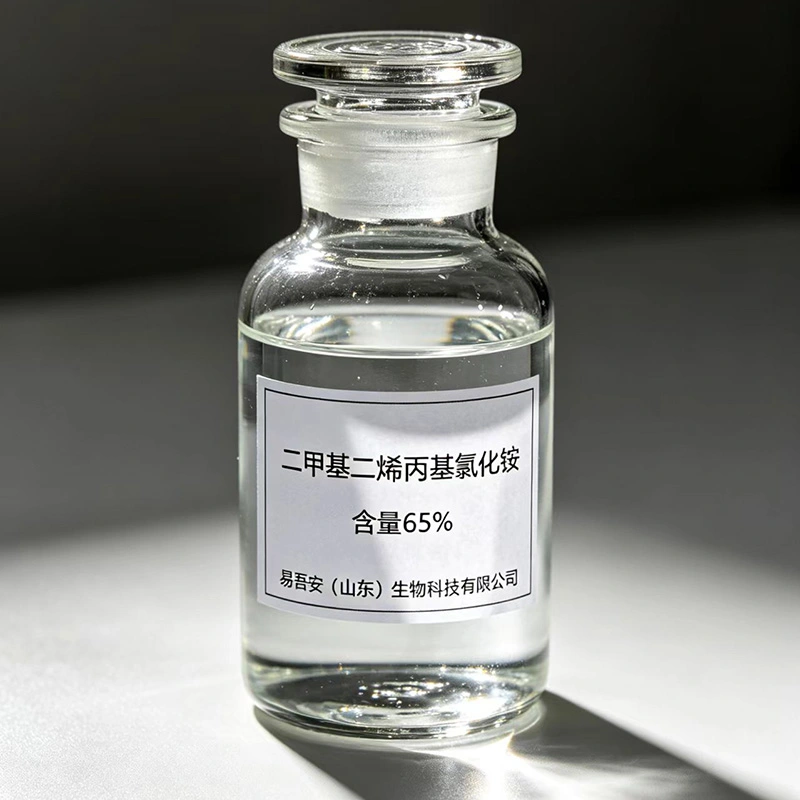
Polymer modification relies heavily on specialized charged building blocks to tune surface affinity, adsorption performance and colloidal stability across aqueous systems. Cationic Monomers introduce permanent positive charge groups into polymer molecular chains, unlocking unique interaction behaviors with negatively charged substrates and particles. This article covers core chemical mechanisms, structural classification, polymerization behavior, practical application boundaries, formulation considerations and performance influencing factors for charged monomer raw materials. Technical teams will gain actionable knowledge about molecular design logic, compatibility constraints, environmental‑related performance shifts and field deployment guidance for water‑based polymer systems. All content focuses purely on chemical properties, processing characteristics and technical application principles without financial‑oriented analysis.
Table of Contents
- 1. How Do Charged Molecular Structures Reshape Polymer Surface Properties?
- 2. What Key Structural Variations Exist Among Charged Synthetic Building Blocks?
- 3. How Do Reaction Conditions Influence Copolymerization Outcomes?
- 4. Which Working Parameters Define Practical Application Boundaries?
- 5. Critical Formulation And Handling Guidelines For Aqueous Polymer Systems
- 6. Frequently Asked Technical Questions
- 7. Access Additional Technical Resources And Expert Insight
Aqueous colloidal systems, water‑treatment flocculants, paper reinforcing agents and textile finishing formulations all depend on controlled electrostatic interactions between polymer chains and surrounding substrates. Cationic Monomers incorporate quaternary ammonium or protonatable amine moieties into macromolecular backbones, granting polymers stable positive surface charge that drives adsorption onto anionic surfaces. Many formulators prioritize overall polymer molecular weight while overlooking charge distribution originating from monomer units. Uneven charge distribution along polymer chains can greatly weaken adsorption efficiency, even when total charge content meets theoretical calculation values. Researchers and industrial formulators must understand intrinsic molecular characteristics to produce polymer materials that deliver consistent functional performance in complex aqueous environments.
1. How Do Charged Molecular Structures Reshape Polymer Surface Properties?
Electrostatic Adsorption Mechanism In Aqueous Media
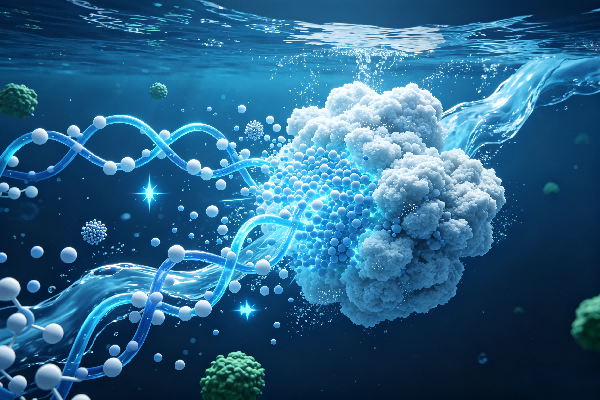
Most natural particles, cellulose fibers and mineral surfaces carry negative surface charge when submerged inside water‑based environments. Positively charged polymer segments are attracted toward these oppositely charged interfaces through long‑range electrostatic force. This attraction enables polymer chains to anchor firmly onto substrate surfaces without relying solely on covalent chemical bonding. Adsorption density directly determines many end‑use performances including flocculation capacity, surface coating coverage and substrate bonding strength.
- Establish electrostatic attraction toward negatively charged solid surfaces
- Adjust polymer water‑solubility and colloidal dispersion stability
- Introduce charge‑driven aggregation for suspended fine particles
- Improve adhesion performance between polymer phase and polar substrates
Impact On Polymer Chain Conformation
Charged side groups create intra‑chain electrostatic repulsion within dissolved polymer molecules. Repulsive forces push polymer chains to expand and stretch inside dilute aqueous solutions. Expanded molecular conformation exposes more functional sites for contact with surrounding particles. When ionic strength of surrounding solution rises, counter‑ions compress electric double layers around charged groups. Polymer chains will coil into more compact shapes, reducing effective hydrodynamic volume and altering practical functional effectiveness.
Formulation teams should recognize that identical polymer materials can display drastically different macroscopic behaviors under varying salt concentration conditions. Lab‑scale performance data obtained under low‑ion‑strength test liquid may not fully represent real‑world performance inside high‑salinity process water streams. Systematic testing under simulated process‑water chemistry becomes necessary for reliable performance prediction.
Surface Modification Of Solid Substrates
After polymer adsorption completes, substrate surface chemical characteristics undergo obvious transformation. Original anionic surface sites become partially covered by positively charged polymer segments. Such surface modification changes wettability, friction behavior and further interaction possibilities with additional chemical additives. Surface charge modification serves as the core working principle for many industrial treatment workflows applied to fibrous materials and mineral particle suspensions.
2. What Key Structural Variations Exist Among Charged Synthetic Building Blocks?
Different molecular architectures create distinct reactivity, charge stability and environmental tolerance for charged monomer substances. Side‑chain length, counter‑ion type and reactive vinyl group position all generate measurable differences during copolymerization and final polymer functional output. Distinguishing these structural traits helps technical personnel make rational raw‑material selection decisions for target system requirements.
| Monomer Structural Category | Charge Stability Feature | Typical Polymerization Compatibility | Main Industrial Application Fields | Key Performance Limitation |
|---|---|---|---|---|
| Quaternary Ammonium Acrylate Series | Permanent charge across broad pH range | Good copolymerization with acrylamide monomers | Water treatment flocculants, paper strengthening agents | Susceptible to impurity‑induced polymerization inhibition |
| Quaternary Ammonium Methacrylate Series | Stable cationic property under variable pH conditions | Moderate reaction activity, high polymer rigidity contribution | Textile finishing, surface coating formulations | Higher glass transition temperature for resulting copolymers |
| Alkyl Amine Vinyl Monomer Series | Charge property pH‑dependent, protonation required | Copolymerizable with multiple vinyl comonomers | Low‑pH industrial treatment systems | Loses positive charge under neutral‑to‑alkaline liquid environment |
| Specialized Allylic Cationic Variants | Permanent quaternary ammonium charge | Lower homopolymerization tendency | Emulsion modification, surface‑treating auxiliary agents | Relatively slow polymerization reaction rate |
Counter‑ion Influence On Practical Performance
Quaternary ammonium charged units always pair with corresponding counter‑anions inside monomer products. Common counter‑ion forms include chloride, sulfate and other organic acid radicals. Counter‑ion species affects monomer solubility, solution viscosity and polymerization kinetic behavior. Some counter‑ion types may bring side‑reaction risks under high‑temperature processing conditions. Even identical cationic backbone structures can show observable differences in processing behaviors simply due to different counter‑ion selection.
Degree Of Charge Permanence
Two major charge modes exist among these chemical building blocks. Quaternary ammonium structures deliver permanent positive charge status regardless of surrounding liquid pH value. Tertiary amine‑based structures only obtain cationic characteristics after protonation within acidic aqueous surroundings. Formulators must match charge permanence traits with actual working pH environment of target application systems. Selecting pH‑sensitive monomers for neutral‑alkaline operating environments will lead to severe loss of expected electrostatic interaction effects. Cationic Monomers carrying quaternary ammonium groups maintain stable charge status across wide pH working windows for most industrial process scenarios.
3. How Do Reaction Conditions Influence Copolymerization Outcomes?
Copolymerization with neutral co‑monomers represents the most frequent processing route for generating functional cationic polymer materials. Reaction parameters including initiator selection, reaction temperature, monomer feeding strategy and solution ionic strength jointly decide final molecular‑chain architecture. Minor deviation of reaction settings can produce obvious changes in charge distribution pattern, molecular‑weight scope and finished‑product colloidal behaviors.
- Reaction temperature controls radical decomposition rate and overall chain‑growth velocity
- Continuous drop‑feeding mode helps realize uniform charge distribution on macromolecular chains
- Initiator dosage sets boundaries for achievable final average molecular weight
- Aqueous‑phase impurity substances may introduce chain‑transfer effects or polymerization inhibition
- Comonomer reactivity ratio determines local monomer sequence arrangement along polymer backbone
Reactivity Ratio And Sequence Distribution
Each monomer type owns unique radical reactivity ratio when participating copolymerization reactions. Discrepancy of reactivity ratios between charged monomers and neutral acrylamide‑type co‑monomers causes non‑uniform segment arrangement if raw materials are added all‑at‑once. Some polymer chains will contain excessive charged segments while other chains hold very limited cationic content. Heterogeneous sequence distribution weakens comprehensive functional performance even when overall monomer feeding proportion remains unchanged.
Common Polymerization Side‑Reaction Risks
During aqueous radical polymerization processes, several undesired side‑reactions may take place. Chain‑transfer reactions can limit maximum achievable molecular weight. Cross‑linking side‑effects may generate micro‑gel particles inside polymer solutions. Micro‑gel fractions will reduce polymer solubility and bring adverse impacts on adsorption and flocculation performances. Strict control over reaction temperature, oxygen exclusion and impurity levels serves as essential measures to suppress unwanted side‑reactions throughout synthesis workflows.
4. Which Working Parameters Define Practical Application Boundaries?
Finished cationic polymer performance does not depend merely on monomer raw‑material quality. Real‑world system conditions impose multiple constraints that shape practical functional output. Technical teams need to evaluate multiple environmental variables before confirming suitable material grades for specific process workflows.
Aqueous System Ionic Strength
Dissolved inorganic salts release large quantities of counter‑ions inside water‑based systems. These free ions compress electrical double layers surrounding charged polymer segments and weaken electrostatic attraction force toward target substrates. Under high‑salinity circumstances, polymer chains tend to contract, and adsorption efficiency declines correspondingly. Formulators should complete performance verification under real‑process water chemistry instead of only relying on pure‑water lab test outcomes.
Working PH Window Limitations
PH value changes alter ionization status for pH‑sensitive amine‑type structures. Permanent quaternary ammonium groups maintain stable positive charge across broad pH ranges. When deploying pH‑dependent monomer derived polymers, operating pH must stay within effective protonation scope. Beyond suitable pH boundaries, electrostatic interaction capacity drops sharply and functional objectives cannot be fulfilled as expected.
Temperature And Mechanical Shear Impact
Elevated working temperature accelerates molecular thermal motion and modifies adsorption‑desorption dynamic equilibrium. Excessive mechanical shear force from pumps and stirring equipment can break macromolecular chains and reduce effective polymer molecular weight. High shear environments degrade polymer performance even if raw‑material specifications satisfy project requirements. Cationic Monomers derived polymer products need full assessment of shear intensity inside target processing equipment during application development work.
5. Critical Formulation And Handling Guidelines For Aqueous Polymer Systems
Well‑designed synthesis formula still requires proper storage, dilution and field operating practices to preserve material intrinsic performance. Improper storage or handling procedures can introduce degradation effects that erase advantages originating from precise molecular design.
Storage Stability Considerations
Aqueous monomer and polymer solutions should avoid prolonged exposure to high‑temperature surroundings. Elevated temperature promotes slow spontaneous polymerization or chemical degradation. Direct light radiation also may initiate undesired radical reactions. Appropriate storage temperature ranges should be followed, and container sealing integrity needs regular inspection to prevent oxygen contamination. Once physical state abnormality such as viscosity sharp shift or gel fragment emergence appears, material should no longer be used for formal formulation tasks.
Dilution And Mixing Operation Notes
High‑concentration stock solutions require gradual dilution under moderate stirring intensity. Violent high‑speed stirring generates intensive mechanical shear which damages long polymer molecular chains. Adding stock solution rapidly into water may trigger local over‑concentration and partial polymer agglomeration. Standardized dilution sequences help retain original molecular‑chain structure and functional properties of polymer products.
Compatibility With Other Formulation Additives
Special attention should be paid when mixing cationic polymer components with anionic chemical agents. Direct mixing of oppositely charged polymer substances will produce charge neutralization and insoluble complex precipitation. Pre‑testing compatibility is strongly recommended whenever introducing new additive components into existing formulation systems. Compatibility screening prevents unexpected sediment generation which would disturb normal process operation.
6. Frequently Asked Technical Questions
Inconsistent charge sequence distribution along polymer chains represents the primary cause. Differences in heating curve, feeding method and initiator adding strategy create varied monomer sequence arrangement even under identical total feed proportion. Local aggregation of charged segments reduces effective contact sites with suspended particles, leading to weakened flocculation effects despite matching overall charge content.
Quaternary ammonium groups retain their intrinsic positive charge status under high‑salt conditions. However, surrounding free ions compress electric double layers and weaken electrostatic attraction forces. Functional performance will decrease to some extent, although charge chemical property itself does not disappear. Adjustment of polymer molecular architecture or effective dosage is often required for high‑ionic‑strength application scenarios.
Tertiary amine groups lose protonation under alkaline liquid conditions. The polymer loses most positive‑charge character, and electrostatic adsorption capacity largely disappears. Formulators must confirm working‑system pH scope before selecting monomer types, and avoid deploying pH‑sensitive raw materials inside sustained alkaline operating environments.
Micro‑gel particles appear as tiny insoluble fragments inside aqueous polymer solutions. These fragments cannot dissolve even under sufficient stirring. Filtering polymer solution through fine‑mesh filter cloth can capture micro‑gel fractions. Existence of micro‑gel will bring negative influence to filtration processes and reduce effective functional sites available for substrate adsorption.
7. Access Additional Technical Resources And Expert Insight
Charged polymer material development combines organic radical polymerization chemistry, colloid surface science and practical industrial‑process domain knowledge. Each real‑world application scenario carries unique boundary conditions including water‑quality chemistry, substrate characteristics, temperature profiles and equipment shear features. General technical reference cannot fully cover all site‑specific variables. Lab‑scale simulation tests remain indispensable before large‑scale practical deployment of new formulation schemes.
Technical documentation, academic papers and industry standard specifications provide valuable reference material for molecular design and formulation optimization work. Continuous accumulation of experimental observation helps chemical‑engineering personnel deepen understanding of structure‑performance correlation for charged polymer systems.
For specialists seeking further technical reference for charged polymer raw‑material solutions, Ewooan holds extensive practical experience supporting diverse industrial polymer‑modification projects.
If you need further technical consultation for polymer‑modification and monomer‑related technical challenges, please get in touch via our dedicated channel.
contact us