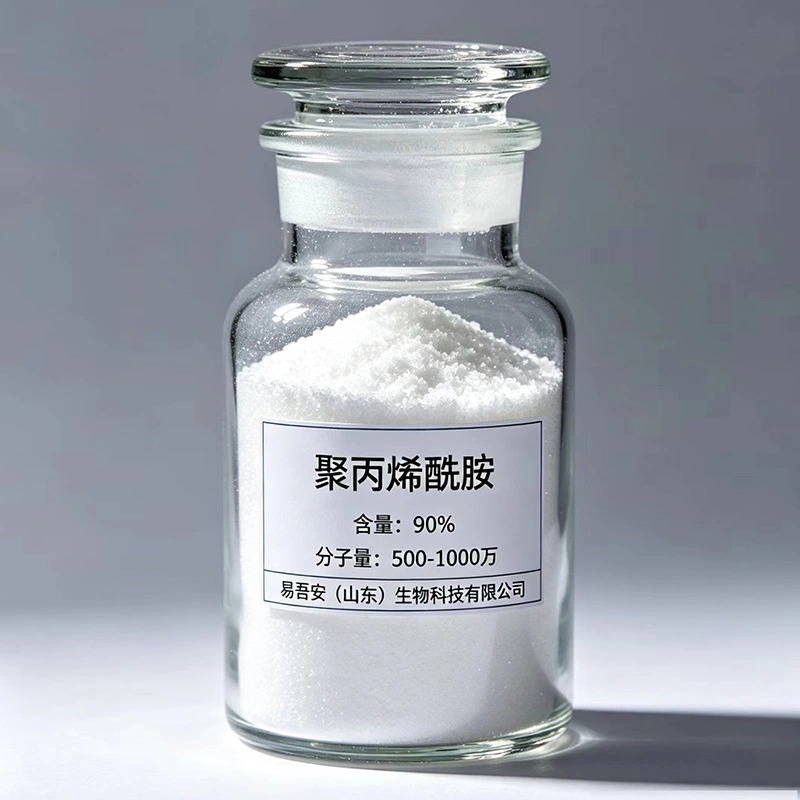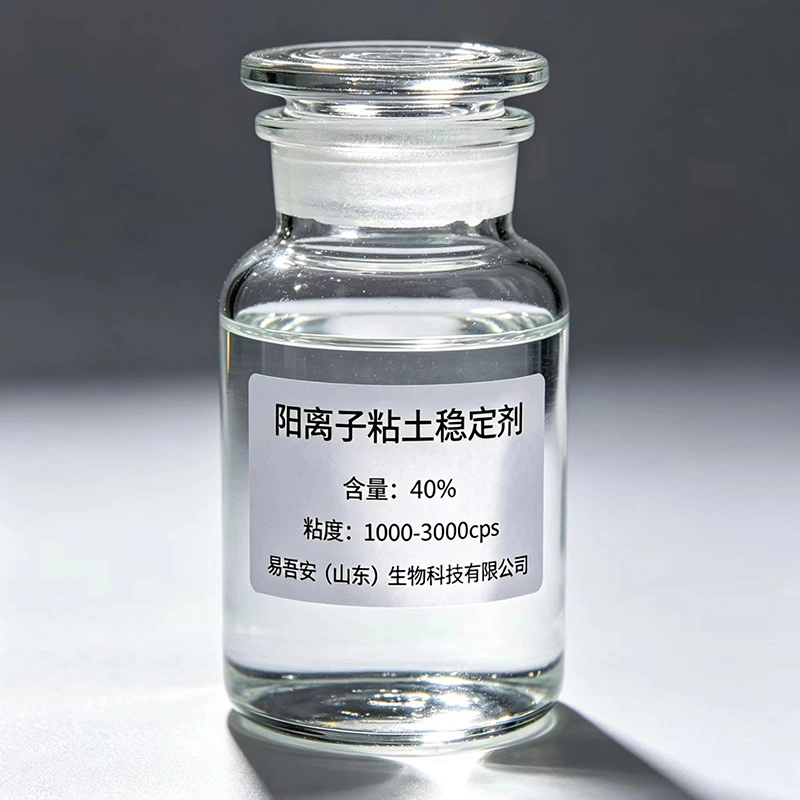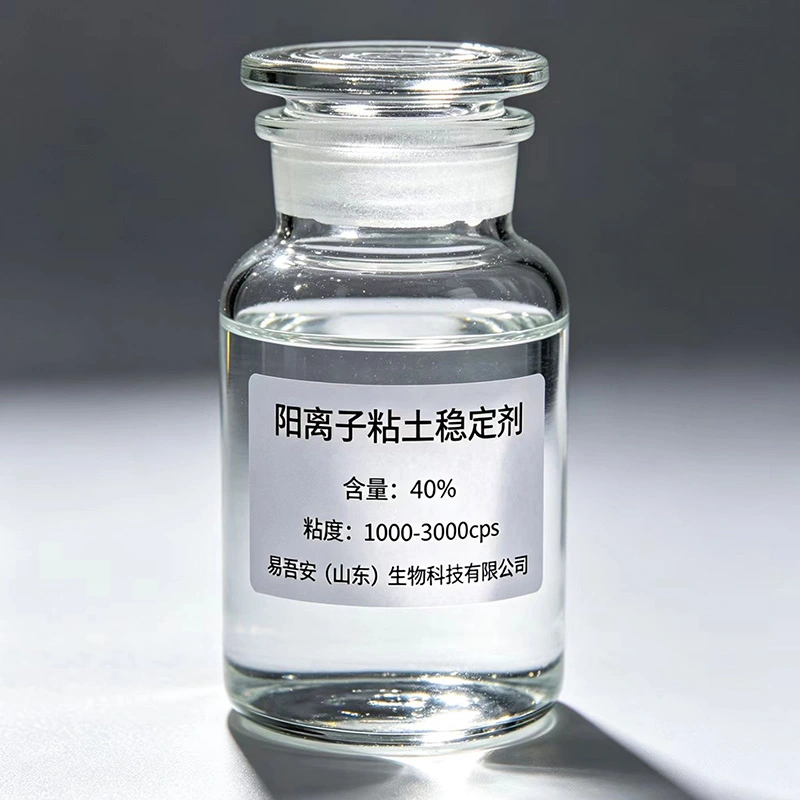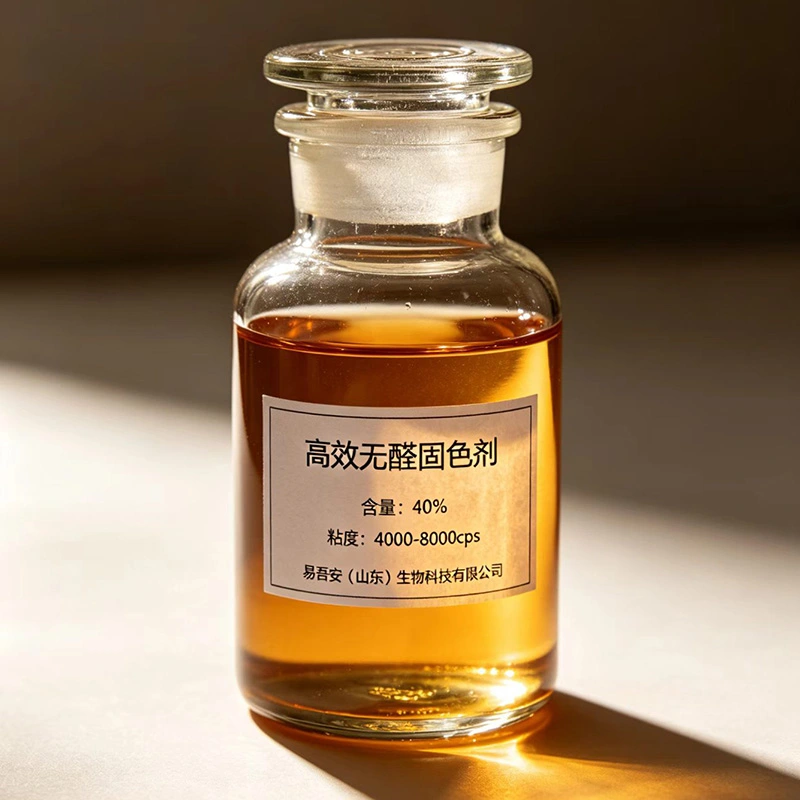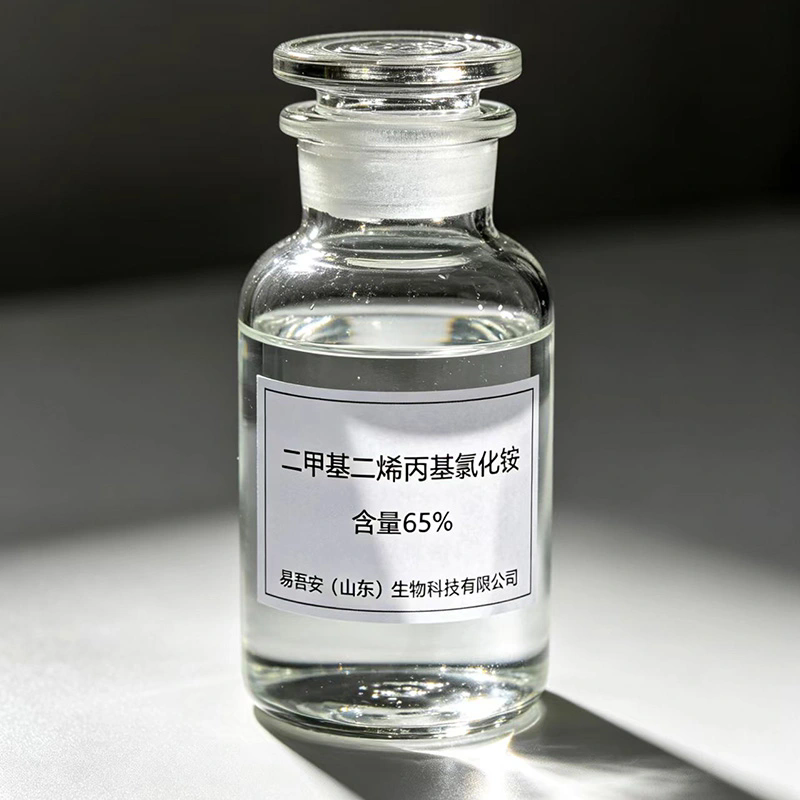
We offer a comprehensive portfolio including DMDAAC, PDMDAAC (liquid and exclusive bead/powder forms), and Polyacrylamide (PAM) series, with an annual production capacity of over 50,000 tons to meet diverse industrial needs.
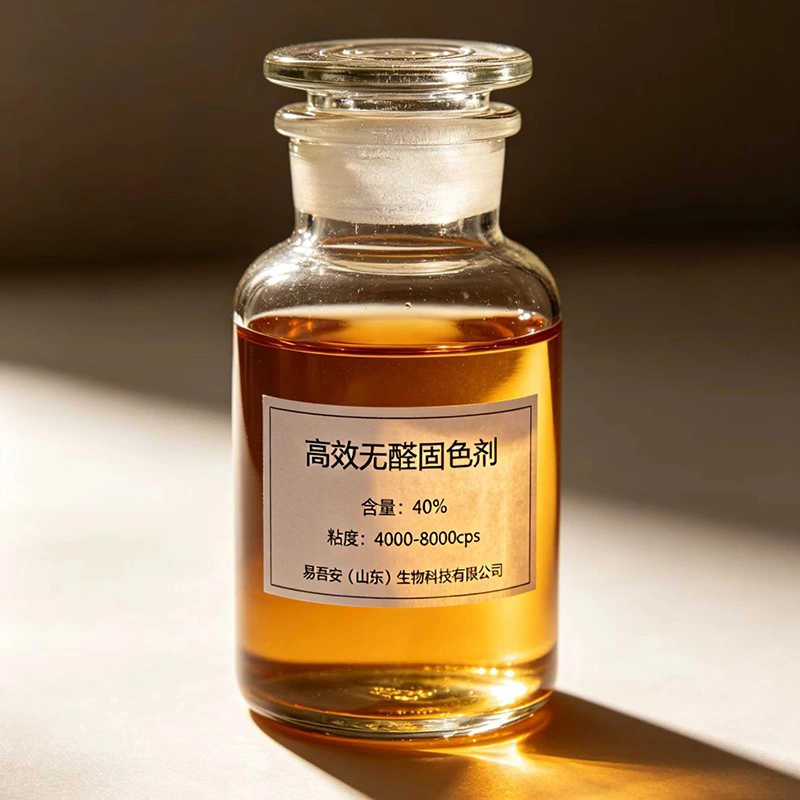
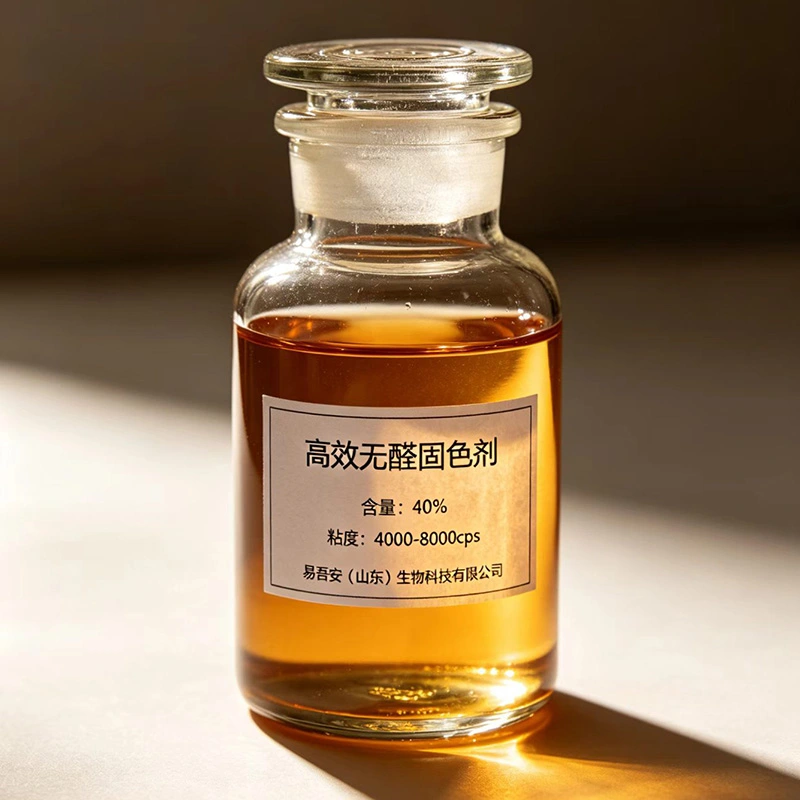
Cationic Textile Dye Fixing Auxiliary Agent is a water-soluble, strongly cationic polyelectrolyte based on quaternary ammonium salts. It appears as a clear, viscous liquid ranging from colorless to pale yellow. Unlike conventional film-forming fixing agents that rely on a single mechanism, this product integrates three synergistic effects: electrostatic anchoring, physical encapsulation, and chemical cross-linking.
It is formulated without the addition or release of free formaldehyde, fully complying with global environmental standards for textiles. With properties such as high charge density, broad pH compatibility, and resistance to acids, alkalis, hard water, chlorine, and salts, it is effective for various dye types (including reactive, direct, acid, and sulfur dyes) and fabric categories (cellulosic, protein, and synthetic blends). It addresses common industry pain points associated with traditional fixing agents—such as limited versatility, stiff hand-feel, shade shifting, and insufficient fastness improvement—making it a key eco-friendly auxiliary for streamlining inventory and standardizing mass production in dyeing and printing facilities.
1.1 Product Classification and Physicochemical Properties
This product is a linear, water-soluble cationic polyelectrolyte (quaternary ammonium salt polymer) designed specifically as an eco-friendly finishing agent for textile dyeing and processing; it contains no formaldehyde or harmful residues. It features excellent fluidity and water solubility, dissolving rapidly and completely in cold water without the need for high-temperature assistance. Non-flammable and hydrolytically stable, the product does not gel or separate during long-term storage and remains insensitive to pH fluctuations. It also exhibits excellent chlorine resistance, making it suitable for complex water quality conditions in dyeing and printing operations.
1.2 Core Mechanism of Action
The vast majority of dyes used in the industry are anionic. After dyeing, significant amounts of unfixed anionic dye molecules remain on the fabric surface, making them prone to detachment and color loss during washing or friction. This cationic textile dye-fixing auxiliary features a high density of cationic active groups that precisely target and bind to free dye on the fabric surface. It eliminates the dye's tendency to dissolve and wash off at the source while locking in stability through cross-linked film formation, ensuring long-lasting color fastness.
1.3 Formaldehyde-Free Eco-Compliance
Unlike traditional formaldehyde-containing products (such as Fixing Agent Y), this product utilizes a formaldehyde-free polymerization process. It contains no formaldehyde in its raw materials, releases no free formaldehyde during use, and results in a finished product free of free formaldehyde. It completely avoids the risk of exceeding formaldehyde limits in textiles, fully meets the environmental compliance standards of major global markets—including Europe, the US, and Southeast Asia—and is suitable for the production of high-end fabrics for export.
2.1 Advantages of an Ordered Linear Polymer Structure
Designed with an extended linear polymer structure, the product avoids the defects associated with branched-chain aggregation. Cationic active groups are evenly distributed along the molecular chain, providing high charge density and stable reactivity. Compared to conventional fixing agents with disordered branched chains, Cationic Textile Dye Fixing Auxiliary Agent offers broader surface coverage and more uniform reactivity. It comprehensively encapsulates both fabric fibers and dye molecules, ensuring consistent fixing performance and eliminating color variation during mass production.
2.2 Layer 1: Electrostatic Attraction and Ionic Bonding Mechanism
Anionic groups within dye molecules—such as sulfonic and carboxylic acid groups—carry a negative charge. The product's highly active cationic groups rapidly bind to these via electrostatic attraction, forming a stable, water-insoluble dye complex. This firmly anchors water-soluble free dye to the fiber surface, effectively preventing color loss, staining, and color bleeding during washing, thereby significantly improving basic wash fastness.
2.3 Layer 2: Physical Sealing via Surface Film Formation
The auxiliary molecules spread evenly across the fabric fibers, forming a thin, breathable, flexible, and transparent polymer protective film. This film does not clog fiber pores or compromise fabric breathability; instead, it physically encapsulates dye particles and shields them from the friction of washing and moisture erosion, physically blocking the pathways through which dye might otherwise dissolve and leach out.
2.4 Layer 3: 3D Cross-linked Network Reinforcement Mechanism
The molecules feature inherent reactive functional groups capable of simultaneously forming covalent cross-links with dye reactive groups, cellulose fiber hydroxyl groups, and protein fiber active sites. This constructs a stable, three-dimensional network structure that firmly bonds the dye, auxiliaries, and fibers together. It fundamentally eliminates the tendency for dye detachment, achieving durable color fixation that remains stable even after repeated washing.
3.1 Conventional Batch Exhaust Fixation Process
Suitable for the post-dyeing fixation of large batches of knitted or woven fabrics in dyeing vats. After the dyeing and washing stages, the bath is adjusted to a neutral or weakly acidic environment, and a measured amount of the fixing auxiliary is added. The fabric is processed at a steady speed—ranging from ambient to moderate temperatures—to ensure uniform adsorption and penetration of the auxiliary. Following the reaction period, the fabric undergoes direct washing and heat-setting; the process is streamlined and requires no equipment modification.
3.2 Continuous Pad-Dry-Cure Process
Designed for continuous assembly-line production, the auxiliary is formulated into a uniform working solution and applied to the fabric via a padding mangle to ensure even pick-up. The fabric then enters a stenter frame for low-temperature curing, rapidly facilitating film formation and cross-linking. This method offers high production efficiency and uniform fixation—eliminating shade variation between the fabric head and tail—making it ideal for high-speed, large-scale production in textile printing and dyeing plants.
3.3 Specialized Reinforcement Process for Dark Fabrics
Tailored for dark fabrics prone to significant color loss (such as bright red or pure black), this method employs a secondary, mild fixation step. After the initial fixation and washing, a low-concentration supplementary fixation treatment is applied to densify the cross-linked surface film. This specifically addresses the industry-wide challenge of poor wet-rub fastness in dark fabrics, resulting in a pure and stable final shade.
3.4 Process Compatibility and Temperature Control Requirements
The Cationic Textile Dye Fixing Auxiliary Agent exhibits excellent resistance to acids, alkalis, hard water, and temperature fluctuations. Standard variations in temperature and pH during dyeing and finishing do not compromise fixation performance, eliminating the need for frequent process parameter adjustments. Treated fabrics can proceed directly to subsequent finishing steps—such as softening, heat-setting, or waterproofing—ensuring seamless workflow integration without disrupting overall production pacing.
4.1 Suitability for Cellulosic Fibers (Cotton, Linen)
Suitable for cotton and linen fabrics dyed with reactive or direct dyes; it precisely targets the hydroxyl groups of cellulosic fibers to achieve cross-linking fixation. It effectively improves wash fastness and dry/wet rubbing fastness, resolving issues such as poor color fastness and fading. After fixation, the fabric retains a natural luster and a soft hand-feel.
4.2 Suitability for Protein Fibers (Silk, Wool)
Perfectly suited for silk and wool fabrics dyed with acid dyes. The mild, non-irritating auxiliary system preserves the delicate texture of protein fibers while effectively locking in dye molecules. It enhances resistance to perspiration and washing, maintaining the premium softness and luster characteristic of silk and wool fabrics.
4.3 Suitability for Synthetic Fibers (Nylon/Polyamide)
Designed for acid-dyeing systems on nylon fabrics, it rapidly adsorbs free dye and strengthens fiber bonding. It mitigates issues like color bleeding and migration during washing without compromising fabric elasticity or breathability, making it ideal for the finishing of functional synthetic fabrics.
4.4 Broad-Spectrum Suitability for Blended Fabrics
Compatible with sulfur and neutral dyes used on various blends—such as polyester-cotton, cotton-nylon, and linen-cotton. It overcomes the limitations of traditional fixing agents that are restricted to specific fabric types; a single product covers the entire range of fabrics, significantly simplifying the selection, procurement, and inventory management of auxiliaries for dyeing and printing plants.
5.1 Synergistic Compatibility with Cationic and Non-ionic Softeners
This product exhibits excellent compatibility and can be used either in the same bath or in separate steps with various cationic and non-ionic softeners. It optimizes the fabric's hand-feel while fixing the color, avoiding issues such as auxiliary antagonism, surface tackiness, uneven coloring (patchiness), or stiffness, thereby simultaneously achieving color fixation, quality enhancement, and a superior hand-feel.
5.2 Synergistic effects with penetrating and leveling agents
This cationic dye-fixing auxiliary can be used in conjunction with dyeing penetrating agents and leveling agents to improve dye penetration uniformity and reduce the accumulation of unfixed surface dye, thereby mitigating the risk of color bleeding at the source. Its use enhances both color fastness and dyeing uniformity, resulting in more consistent product quality.
5.3 Compatibility with chlorine-resistant and sweat-resistant auxiliaries
For applications such as bathroom textiles, outdoor fabrics, and intimate apparel, Cationic Textile Dye Fixing Auxiliary Agent can be used synergistically with chlorine- and sweat-resistant auxiliaries. This further enhances the fabric's resistance to washing, pool chlorine, and human sweat, meeting the production standards for high-end functional textiles.
5.4 Incompatibilities and usage precautions
Avoid direct mixing or co-dosing in the same bath with anionic auxiliaries or strong oxidizing agents to prevent emulsion breakdown, loss of efficacy, or phase separation. Stepwise dosing and intermediate rinsing maximize the effectiveness of the various auxiliaries and prevent processing conflicts.
6.1 Key technical parameters
Appearance: Colorless to pale yellow, viscous, transparent liquid;
Ionic nature: Strong cationic polyelectrolyte with high charge density;
Solubility: Rapidly soluble in cold water; aqueous solution is stable and does not gel;
Durability: Resistant to acids/alkalis, hard water, salts, chlorine, and high temperatures;
Environmental profile: Zero free formaldehyde, zero formaldehyde release, non-toxic and safe;
pH compatibility: Stable across a wide pH range; highly adaptable to various processes.
6.2 Precision selection guidelines
For light-colored fabrics, lightweight materials, and light-colored silk or wool, prioritize standard low-concentration formulations to ensure no impact on the color shade. For medium-shade standard fabrics, use the general-purpose grade to balance fastness with production costs. For dark fabrics, materials requiring high fastness, or outdoor functional fabrics, select high-solids formulations to enhance cross-linking and fixation effects.
6.3 Recommendations for Standardized Factory Use
Conduct small-scale trials prior to mass production; fine-tune auxiliary concentrations and reaction times based on fabric material, dye type, and fabric thickness. Strictly avoid co-bathing with anionic auxiliaries. Ensure thorough rinsing after fixation to remove residual surface auxiliaries, thereby guaranteeing optimal hand-feel and color purity. Keep containers sealed during storage and use to prevent contamination that could compromise product efficacy.
6.4 Packaging, Storage, and Shelf Life Specifications
Packaging: Standard PE plastic drums and IBC totes; supports both small-batch sampling and large-scale industrial orders.
Storage Conditions: Store in a sealed container within a cool, dry, and well-ventilated warehouse; keep away from direct light and strong oxidizing agents.
Shelf Life: 6--12 months under standard storage conditions.
Transport: Classified as non-hazardous; safe and convenient for sea and land transport; hassle-free cross-border customs clearance.
Q1: Is this Cationic Textile Dye Fixing Auxiliary Agent truly formaldehyde-free? Can it be used for export fabrics?
No formaldehyde-containing raw materials are used in the production process, and the finished product contains no free formaldehyde nor releases formaldehyde during application. It fully complies with global environmental standards for textiles and is safe for processing fabrics destined for European, American, and Southeast Asian markets, posing no risk of exceeding limits or product returns.
Q2: What are its key advantages compared to standard fixing agents?
Unlike conventional single-mechanism film-forming fixing agents, this product employs a triple-action fixation mechanism—electrostatic anchoring, film-forming encapsulation, and cross-linked network formation—resulting in superior overall color fastness. It is compatible with a wide range of dyes and fibers, does not cause fabric stiffening or color alteration, and offers excellent weather resistance, allowing factories to significantly streamline their auxiliary inventory.
Q3: Will the treated fabric become stiff or discolored, or will the hand-feel be compromised?
No. The product forms a lightweight, breathable film through a mild cross-linking reaction. It preserves the fabric's softness and loft, causes negligible color shift, and does not compromise light, perspiration, or chlorine fastness, making it perfectly suited for the quality requirements of high-end apparel, home textiles, and next-to-skin fabrics.
Q4: Which other textile auxiliaries can it be used with? What precautions should be taken?
It can be used synergistically with cationic and non-ionic softeners, penetrating agents, leveling agents, and functional weather-resistance additives, yielding significant synergistic effects. Direct co-application in the same bath with anionic auxiliaries or strong oxidizing agents is strictly prohibited, as this can lead to additive deactivation and fabric surface defects; sequential dosing with intermediate rinsing is recommended.
Address
Wanhong Plaza, Jinan City, Shandong Province, China
Tel