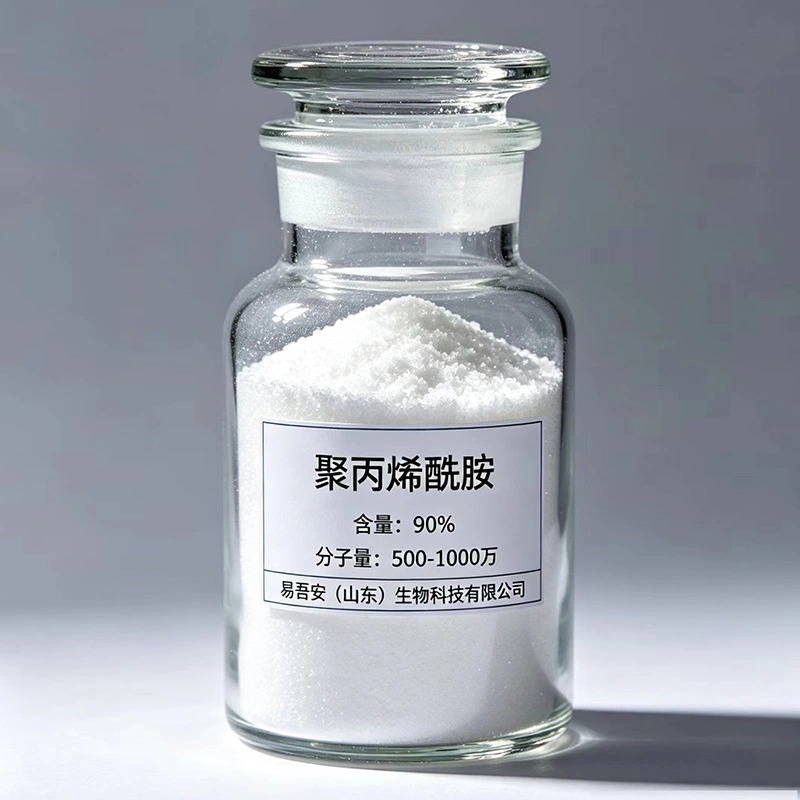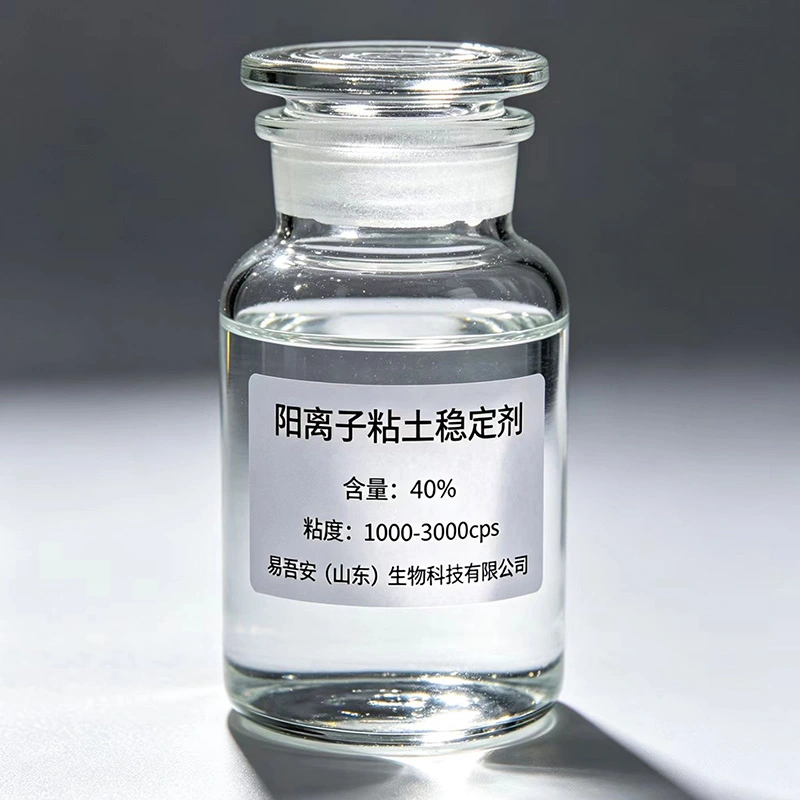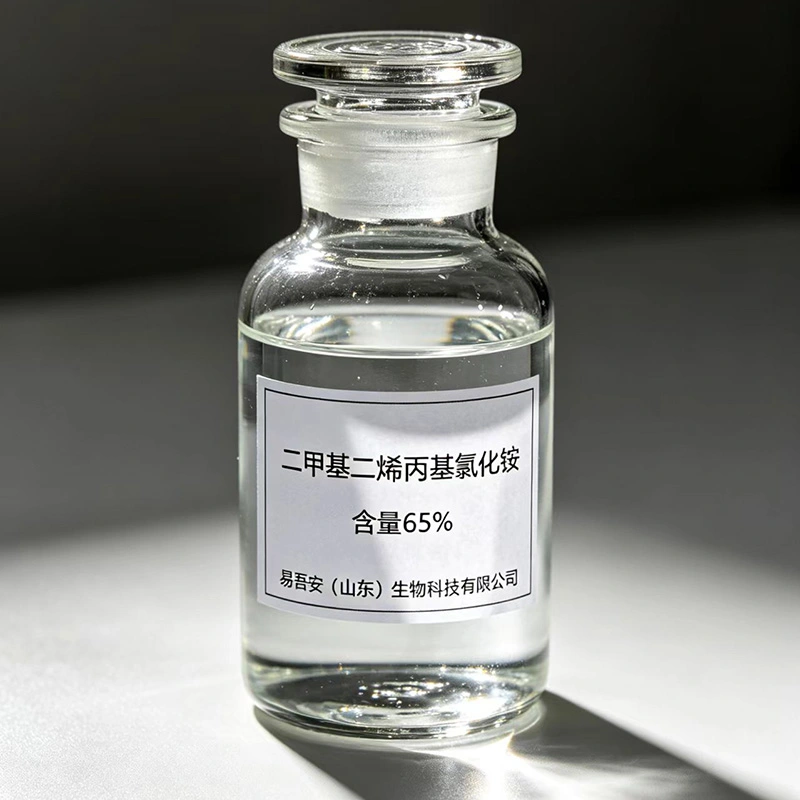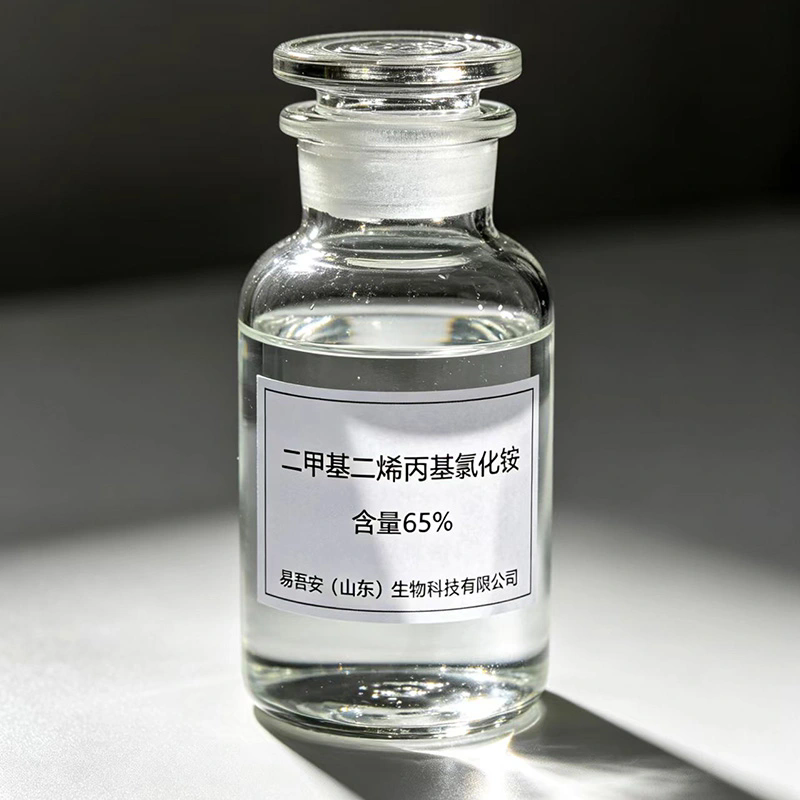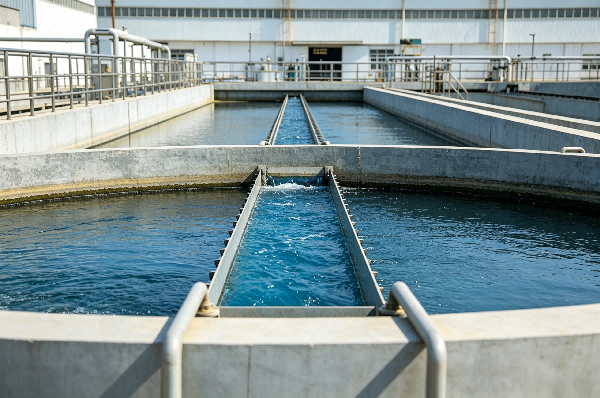
We offer a comprehensive portfolio including DMDAAC, PDMDAAC (liquid and exclusive bead/powder forms), and Polyacrylamide (PAM) series, with an annual production capacity of over 50,000 tons to meet diverse industrial needs.
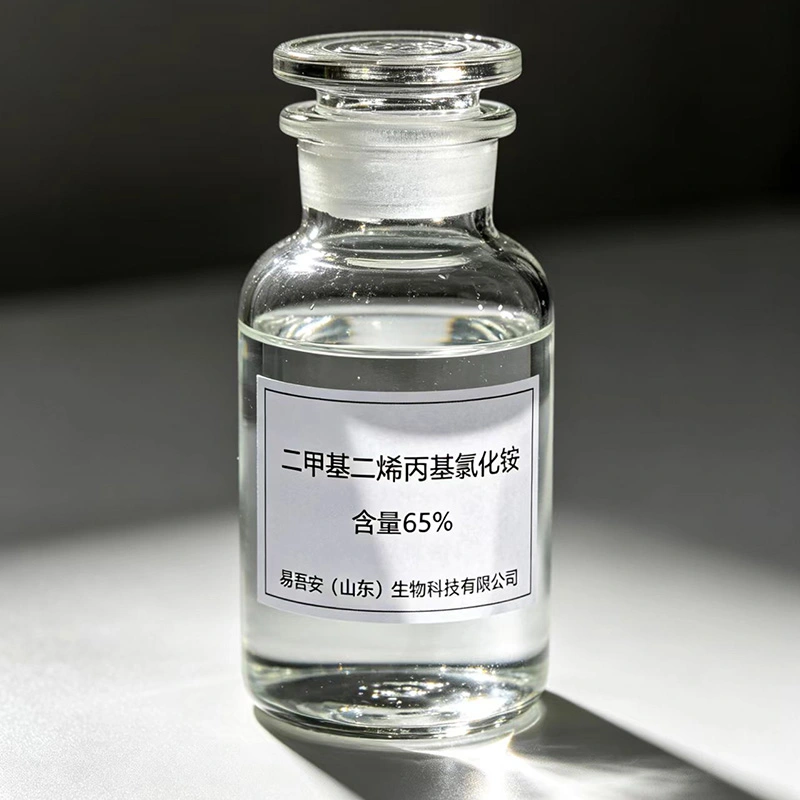
DADMAC (Diallyldimethylammonium chloride) is a polymer-grade quaternary ammonium cationic monomer designed specifically for aqueous-phase free-radical polymerization. Its unique molecular structure—combining a diallyl backbone with permanent quaternary ammonium groups—enables efficient homopolymerization to produce PolyDADMAC, as well as versatile copolymerization with co-monomers such as acrylamide (AM) and acrylic acid.
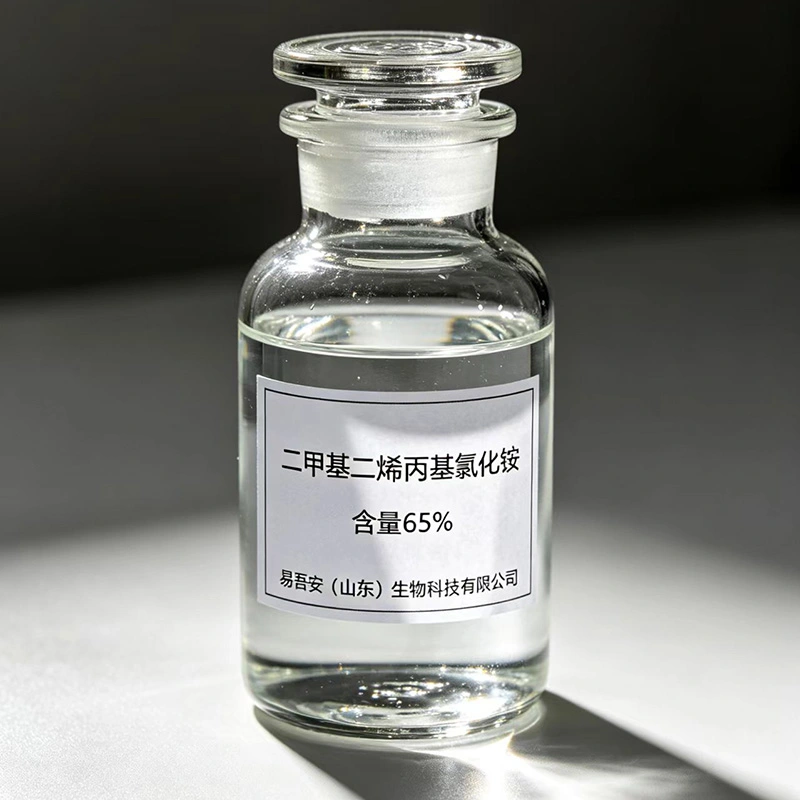
| item / Code | 205-1 | 205-2 | 205-4 |
| Appearance | Clear transparent liquid | ||
| Solid content, % | 60 ±1 | 61.5 | 65 ±1 |
| PH | 5.0-7.0 | ||
| Color(APHA) | ≤50 | ||
| NaCl,% | ≤2.0 | ||
1 Differences in Product Properties and Production Stages
DADMAC: A cationic monomer raw material serving as the fundamental building block for polymerization; it is an upstream material that requires a polymerization reaction to yield functional high-molecular-weight products.
PolyDADMAC: A finished high-molecular-weight polymer resulting from DADMAC polymerization; it is a downstream additive ready for direct application without further polymerization.
2 Differences in Core Functions and Application Scenarios
DADMAC: Primarily used for polymerization and modification; it enables the custom production of cationic polymers with varying molecular weights and ionicities, catering to independent R&D, formulation tuning, and mass-production modification needs.
PolyDADMAC: Primarily used for direct application; it serves as a finished flocculant or additive in end-use sectors such as wastewater treatment, papermaking, and textiles.
3 Differences in Process Flexibility and Adaptability
DADMAC: Supports homopolymerization and copolymerization with monomers like AM (acrylamide) and acrylic acid. It offers high process flexibility, allowing for the customization of differentiated finished products—ideal for manufacturers focused on precision and custom production.
PolyDADMAC: Features fixed performance characteristics that cannot be further modified; it is suitable only for standardized, general-purpose end-use applications.
4 Differences in Procurement Positioning and Target Users
DADMAC: Suited for chemical additive manufacturers, new materials companies, and R&D institutions looking to synthesize their own end products.
PolyDADMAC: Suited for end-user facilities such as wastewater treatment plants, paper mills, and textile factories for direct application in their production processes.
Understanding how DADMAC Cationic Monomer for Polymer Production behaves in polymerization reactions requires looking beyond basic purity metrics. Below are the characteristics that matter most for process design:
Reactivity of the Diallyl Double Bonds
The molecule contains two allyl groups that participate in cyclopolymerization, forming five-membered pyrrolidinium rings in the polymer backbone. This cyclic structure contributes to the high charge density and rigid backbone of PolyDADMAC — directly influencing flocculation performance in downstream applications. The polymerization follows conventional free-radical kinetics, with initiation typically provided by persulfate or azo initiators.
Copolymerization Compatibility
Beyond homopolymerization, DADMAC readily copolymerizes with:
Acrylamide (AM) → Cationic polyacrylamide copolymers (CPAM) for sludge dewatering
Acrylic acid (AA) → Amphoteric polymers with tailored charge balance
Other quaternary monomers → Customized charge density formulations
The copolymerization reactivity ratios favor incorporation into growing polymer chains with minimal residual monomer, supporting high conversion yields under standard process conditions.
Process Adaptability
pH tolerance: Stable within pH 5.0--7.0 without hydrolysis or quaternary group degradation
Temperature compatibility: Effective at ambient to moderate temperatures (20-60°C), compatible with both thermal and redox initiation systems
Solvent flexibility: Bulk polymerization in water; solution polymerization in water/ethanol mixtures
The performance of PolyDADMAC and DADMAC-based copolymers is directly traceable to monomer quality and polymerization conditions. Below is how specific monomer attributes influence final polymer properties:
| Monomer Attribute | Polymer Property Influenced | Performance Outcome |
| High cationic charge density | Charge neutralization capacity | Lower dosage required for flocculation; faster settling rates |
| Diallyl cyclic structure | Backbone rigidity | Higher shear stability; better performance in high-turbidity water |
| Low NaCl content (<2.0%) | Higher intrinsic viscosity | Achieves target molecular weight with less initiator; cost savings |
| Consistent pH (5.0-7.0) | Reproducible polymerization kinetics | Batch-to-batch consistency in polymer performance |
| Low residual impurities | Higher conversion rate | Less unreacted monomer residue; lower purification cost |
This table illustrates why DADMAC Cationic Monomer for Polymer Production requires stricter quality control than DADMAC intended for other applications. The polymerization process amplifies any monomer impurity — what is a trace contaminant at the monomer stage can become a significant defect in the final polymer product.
Storage: Store in sealed containers in a cool, dry, and well-ventilated area (recommended 5-30°C). Protect from direct sunlight, extreme temperatures, and oxidizers. Shelf life: 2 years when properly stored.
Packaging: 125kg PE drum, 200kg PE drum, or 1000kg IBC tote. Custom packaging and private labeling available.
Transportation: Classified as non-hazardous goods — simplified logistics and lower freight costs.
Process Note for Polymerization: Unlike general-purpose DADMAC, polymerization-grade monomer requires care to avoid contamination during transfer. Even trace metal ions or oxygen can affect initiation efficiency. We recommend:
Using dedicated transfer lines for monomer handling
Nitrogen purging of reactors before polymerization
Storing opened drums under inert gas if not used immediately
For detailed polymerization protocols, please contact our technical team for process guidance tailored to your reactor configuration and target polymer specifications.
Q1: What are the typical initiator systems used for DADMAC polymerization?
DADMAC polymerization is typically initiated by water-soluble free-radical initiators. Common systems include:
Thermal initiators: Potassium persulfate (KPS), ammonium persulfate (APS) — typically used at 40-60°C
Redox systems: Persulfate/TEMED or persulfate/sodium metabisulfite — effective at lower temperatures (20-40°C)
Azo initiators: V-50 (2,2'-azobis(2-methylpropionamidine) dihydrochloride) — offers cleaner decomposition kinetics
The choice depends on your target polymerization temperature, molecular weight distribution requirements, and whether residual initiator fragments in the polymer are a concern.
Q2: What is the recommended polymerization concentration for DADMAC?
For homopolymerization, DADMAC is typically polymerized at 30-50% active concentration in aqueous solution. Higher concentrations favor higher molecular weight but increase viscosity and heat generation. For copolymerization with acrylamide, the total monomer concentration can range from 20-40%, with DADMAC content typically 10-80% of the monomer molar ratio depending on target charge density.
Q3: How does sodium chloride content affect polymerization?
NaCl content (≤2.0% in Ewooan DADMAC) influences:
Solution viscosity: Higher salt reduces viscosity, enabling higher solids polymerization
Molecular weight: Salt screens electrostatic repulsion between growing polymer chains, generally favoring higher molecular weight
Polymer solubility: Affects the phase behavior of the reaction mixture
For applications requiring ultra-high molecular weight polymers, we offer low-salt grade options upon request.
Q4: Can DADMAC Cationic Monomer for Polymer Production be used directly for water treatment without polymerization?
No. This is a common misconception. DADMAC is a monomer with molecular weight of only 161.5 — it has minimal flocculation or charge neutralization effect on suspended particles. Its value as a water treatment agent is realized only after polymerization into PolyDADMAC or copolymers with molecular weights exceeding 100,000 Da. For direct water treatment applications, please refer to our PolyDADMAC product line.
Q5: What causes incomplete conversion or gel formation during polymerization?
Common causes include:
Oxygen inhibition: Oxygen scavenges free radicals; nitrogen purging before initiation is recommended
Temperature control: Exothermic polymerization requires adequate heat removal; temperature spikes can cause crosslinking
Initiator dosage: Insufficient initiator leads to low conversion; excessive initiator can promote chain transfer and gelation
Monomer purity: Impurities can act as radical scavengers or chain transfer agents
Our technical team offers customized polymerization protocols and can assist with troubleshooting your existing process.
Q6: Does DADMAC quality affect PolyDADMAC molecular weight distribution?
Yes. Batch-to-batch variations in monomer purity — particularly NaCl content, pH, and residual impurities — directly impact polymerization kinetics, resulting in:
Inconsistent molecular weight distribution (Mw/Mn)
Variation in intrinsic viscosity
Reduced polymer solubility in some cases
Ewooan DADMAC is manufactured to polymerization-grade standards with full-batch QC reports, ensuring reproducible polymerization results across deliveries.
Address
Wanhong Plaza, Jinan City, Shandong Province, China
Tel