

Article Abstract: As drilling operations move into deeper, hotter, saltier, and more geologically complex formations, controlling clay hydration and particle migration has become essential for maintaining wellbore integrity and reservoir productivity. Ewooan provides a high-performance Cationic Clay Stabilizer for Oilfield Drilling designed to inhibit clay swelling, dispersion, and migration through electrostatic adsorption, film-forming protection, and particle anchoring. This article explains its working mechanism, key performance advantages, application scenarios, compatibility, procurement considerations, and role in modern oilfield drilling systems.
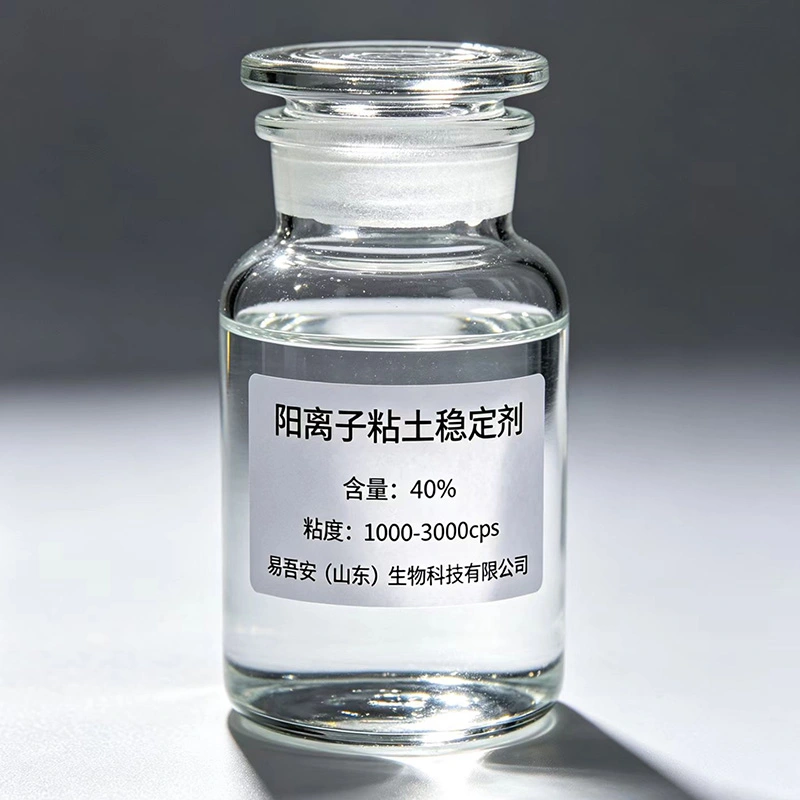
Table of Contents
- What Is a Cationic Clay Stabilizer for Oilfield Drilling?
- What Are the Key Benefits of Using a Cationic Clay Stabilizer?
- How Does the Stabilizer Control Clay in Drilling Fluids?
- Where Is Cationic Clay Stabilizer Used in Oilfield Drilling?
- How Does It Improve Wellbore Stability?
- What Performance Factors Should Buyers Evaluate?
- How Does It Compare with Traditional Clay Stabilizers?
- Frequently Asked Questions
- Conclusion
What Is a Cationic Clay Stabilizer for Oilfield Drilling?
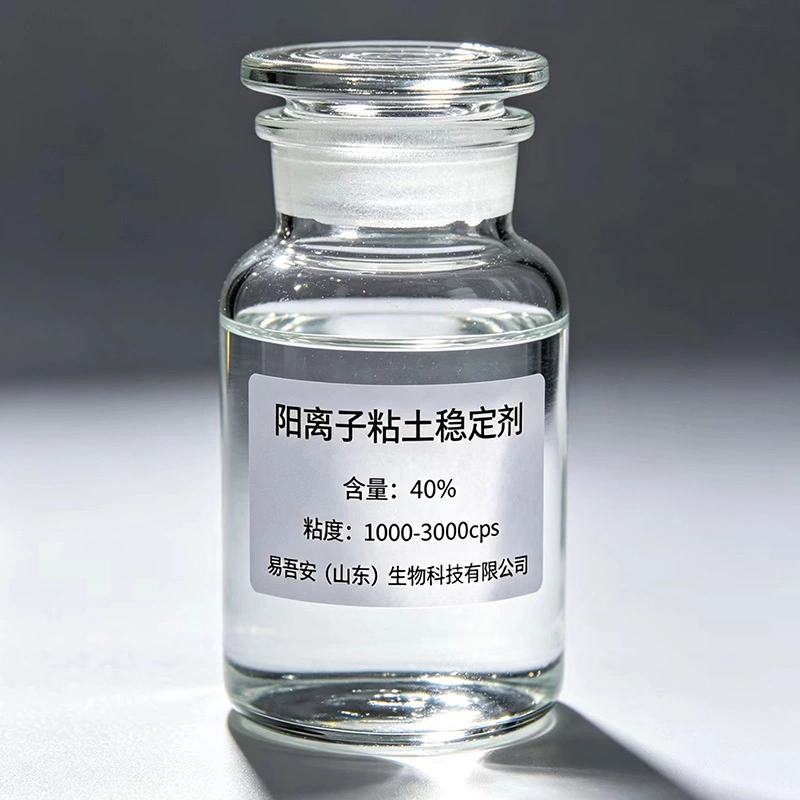
Cationic Clay Stabilizer for Oilfield Drilling is a strongly cationic polymeric additive developed to control water-sensitive clay minerals encountered during drilling, completion, stimulation, and related oilfield operations. Ewooan's product is based on a quaternary ammonium-type cationic polyelectrolyte produced through polymerization technology.
Water-sensitive formations may contain clay minerals such as montmorillonite and illite. When exposed to water, these minerals can hydrate, swell, disperse, or migrate. The resulting problems may include pore-throat blockage, formation damage, increased drilling resistance, borehole instability, and stuck-pipe risks.
The stabilizer addresses these problems by interacting directly with negatively charged clay surfaces. According to Ewooan's product information, the material has a specific gravity of approximately 1.02 g/cm³, while the standard grade has a decomposition temperature above 150°C and specialized grades can withstand temperatures up to approximately 300°C.
What Are the Key Benefits of Using a Cationic Clay Stabilizer?
A properly selected clay stabilizer can provide both immediate drilling-fluid benefits and longer-term reservoir protection. Its major advantages include:
- Effective clay swelling inhibition: Helps control hydration and swelling of water-sensitive clay minerals.
- Particle migration control: Anchors fine clay particles and reduces their movement through drilling-fluid circulation.
- Wellbore protection: Helps maintain borehole integrity in unstable and shale-rich formations.
- Reservoir protection: Reduces the risk of permeability loss caused by clay expansion and pore plugging.
- Wide fluid compatibility: Can be incorporated into various drilling, fracturing, acidizing, and completion fluid systems.
- Thermal stability: Specialized grades can be considered for deep and high-temperature applications.
- Salt resistance: Suitable for applications involving brine and calcium chloride-based water systems.
- Chloride-free formulation: Provides an alternative to conventional inorganic chloride-based clay stabilization approaches.
- Operational versatility: Can support drilling, completion, fracturing, acidizing, water injection, and workover applications.
For oilfield operators, these advantages can translate into fewer fluid-related complications, more predictable drilling performance, and better protection of formation permeability.
How Does the Stabilizer Control Clay in Drilling Fluids?
The effectiveness of a cationic clay stabilizer depends on its ability to interact with clay particles at several levels. Ewooan describes a three-stage stabilization mechanism.
1. Electrostatic Charge Adsorption
Clay surfaces generally carry negative charges. The strongly cationic groups in the polymer are attracted to these surfaces and can adsorb onto the clay particles. This charge-neutralization process reduces the tendency of clay minerals to interact excessively with water and swell.
2. Protective Film Formation
After adsorption, polymer chains can form a protective layer around clay particles. This film helps limit water penetration into clay interlayers and contributes to the stabilization of sensitive formation minerals.
3. Particle Anchoring
Fine clay particles can become mobile when exposed to circulating drilling fluids. The polymer helps anchor these particles, reducing dispersion and migration. This can help keep flow channels clearer and contribute to more stable borehole conditions.
This multi-mechanism approach is particularly valuable because clay-related formation damage is rarely caused by swelling alone. Hydration, dispersion, migration, and pore plugging can occur simultaneously.
Where Is Cationic Clay Stabilizer Used in Oilfield Drilling?
The application range depends on formation characteristics, fluid chemistry, temperature, salinity, and the overall drilling program. Common application scenarios include the following:
| Application Scenario | Main Challenge | Stabilizer Function |
|---|---|---|
| Water-Sensitive Sandstone | Clay hydration and permeability reduction | Controls swelling and particle migration |
| Shale Drilling | Wellbore instability and shale dispersion | Provides adsorption, sealing, and particle anchoring |
| Deep-Well Drilling | High temperature and pressure | Supports clay stabilization under demanding conditions |
| High-Salinity Formations | Mineralization and fluid compatibility | Maintains stabilization performance in brine systems |
| Fracturing Operations | Clay swelling caused by treatment fluids | Helps protect formation permeability |
| Water Injection | Clay migration and pore plugging | Supports stable formation flow characteristics |
For projects involving unusual formation chemistry, laboratory compatibility and formation-specific testing should be completed before large-scale field deployment.
How Does It Improve Wellbore Stability?
Wellbore instability is one of the most costly challenges associated with water-sensitive formations. When drilling fluid enters a clay-rich formation, uncontrolled hydration can cause clay minerals to swell and weaken the surrounding rock structure.
This may contribute to:
- Borehole enlargement or constriction
- Shale sloughing and formation collapse
- Excessive fine-particle generation
- Increased circulation pressure
- Drill-string sticking
- Reduced drilling efficiency
- Formation permeability damage
By limiting water-clay interaction and stabilizing clay particles, a cationic polymer can help maintain a more uniform wellbore. This is particularly important when drilling through shale, fractured formations, or other formations with high water sensitivity.
In addition to protecting the borehole during drilling, clay stabilization can provide downstream benefits. Preserving the original pore structure helps create a better foundation for completion, stimulation, production, and water-injection operations.
What Performance Factors Should Buyers Evaluate?
Oilfield chemical procurement should not be based solely on product price. Buyers should evaluate the stabilizer according to actual formation and drilling-fluid requirements.
| Evaluation Factor | Why It Matters | Example Consideration |
|---|---|---|
| Clay Inhibition | Determines the ability to suppress swelling | Inhibition rate and formation-specific test results |
| Temperature Resistance | Important for deep and thermal operations | Standard and high-temperature grades |
| Salt Compatibility | Essential for brine and high-mineralization systems | Performance in formation water and CaCl₂ brine |
| Fluid Compatibility | Prevents precipitation and additive antagonism | Compatibility with drilling and stimulation additives |
| Environmental Profile | Supports regulatory and environmental requirements | Chloride content, toxicity, and biodegradability |
| Supply Consistency | Important for continuous drilling programs | Batch quality control and supply capacity |
Ewooan reports a standard clay inhibition rate of approximately 85%–88%, with modified grades exceeding 91% under specified testing conditions. Because field performance depends on formation mineralogy and fluid chemistry, these values should be verified against the buyer's own laboratory and field testing requirements.
How Does It Compare with Traditional Clay Stabilizers?
Traditional inorganic salt stabilizers can provide clay inhibition, but modern oilfield operations increasingly require solutions that combine performance, compatibility, environmental considerations, and application flexibility.
| Factor | Cationic Polymer Stabilizer | Traditional Inorganic Salt Approach |
|---|---|---|
| Stabilization Mechanism | Adsorption, film formation, and particle anchoring | Primarily ionic interaction |
| Chloride-Free Option | Yes | Depends on the selected salt |
| High-Temperature Grades | Available for demanding applications | Performance depends on chemistry |
| Particle Migration Control | Strong polymer anchoring effect | Generally more limited |
| Application Range | Drilling, completion, fracturing, acidizing, water injection | Often more application-specific |
| Environmental Considerations | Can offer low-toxicity and biodegradable options | Depends on chemical composition |
The right choice ultimately depends on formation conditions, fluid chemistry, regulatory requirements, and the operator's technical objectives. A laboratory screening program remains an important step before changing an established drilling-fluid formulation.
How Should It Be Added to a Drilling Fluid System?
The product is designed for a practical mix-and-use application approach. However, dosage should be determined according to clay content, water sensitivity, drilling-fluid volume, salinity, temperature, and other operating parameters.
- Collect representative formation and formation-water samples.
- Evaluate clay mineralogy and water sensitivity.
- Conduct laboratory compatibility and inhibition testing.
- Determine an appropriate stabilizer concentration.
- Add the stabilizer uniformly to the base drilling fluid.
- Monitor viscosity, filtration, solids behavior, and drilling performance.
- Adjust the formulation according to actual downhole conditions.
For complex formations, a small-scale pilot test is strongly recommended before full-scale application. The product should also be stored in sealed containers in a cool, dry, well-ventilated environment and protected from direct light and strong oxidizing agents.
Why Is Supplier Selection Important for Oilfield Chemical Procurement?
Choosing a reliable China supplier or manufacturer involves more than comparing quotations. Oilfield chemical performance can be strongly affected by batch consistency, active content, polymer characteristics, testing procedures, packaging, and technical support.
When evaluating a Cationic Clay Stabilizer for Oilfield Drilling manufacturer, procurement teams should consider:
- Documented product specifications and quality-control procedures
- Batch-to-batch consistency
- Formation-specific technical support
- Laboratory testing and compatibility evaluation
- High-temperature and high-salinity application experience
- Flexible packaging and bulk supply capabilities
- Export experience and logistics support
- Technical communication before and after delivery
Ewooan's oilfield chemical product range covers clay stabilizers, polymer clay-control additives, and other oilfield chemical additives. Its product information also describes quality inspection across indicators such as solid content, cationic charge density, clay inhibition, temperature resistance, salt resistance, and fluid compatibility.
Frequently Asked Questions
1. What is the main purpose of a Cationic Clay Stabilizer for Oilfield Drilling?
Its primary purpose is to inhibit clay hydration, swelling, dispersion, and migration during drilling and related oilfield operations. By stabilizing sensitive clay minerals, it helps reduce formation damage, wellbore instability, pore plugging, and associated operational risks.
2. Can this stabilizer be used in high-temperature drilling?
Yes. Ewooan states that its standard grade has a decomposition temperature above 150°C, while specialized high-temperature grades can withstand temperatures of up to approximately 300°C. Actual suitability should be confirmed through application-specific testing.
3. Is it suitable for high-salinity drilling fluids?
The product is designed to work with fresh water, brine, and calcium chloride brine and offers resistance to salt and fluid erosion. For a specific formation, laboratory testing should still be performed to verify compatibility and optimum dosage.
4. Can it be combined with other drilling-fluid additives?
It is described as compatible with many common drilling and stimulation additives, including fluid-loss-control agents, viscosifiers, shale inhibitors, fracturing-fluid systems, corrosion inhibitors, and drag reducers. Strong oxidizers and excessively alkaline additives should be avoided unless compatibility has been specifically established.
5. How should the correct dosage be determined?
There is no universal dosage that fits every formation. The appropriate concentration should be established through laboratory testing based on clay content, mineralogy, formation-water chemistry, drilling-fluid composition, temperature, salinity, and the severity of wellbore instability.
Conclusion
A reliable Cationic Clay Stabilizer for Oilfield Drilling can play an important role in controlling clay swelling, dispersion, and particle migration while supporting wellbore integrity and reservoir protection. With its cationic adsorption, protective film formation, and particle-anchoring mechanisms, Ewooan's solution is designed for conventional water-sensitive formations as well as challenging shale, high-temperature, deep-well, and high-salinity applications. For oilfield operators and procurement teams seeking a dependable chemical solution, evaluating formation compatibility, inhibition performance, thermal stability, environmental characteristics, and supply consistency is essential. If you are looking for a professional China manufacturer and supplier for oilfield clay stabilization solutions, contact us to discuss your formation conditions, testing requirements, packaging needs, and customized supply plan.