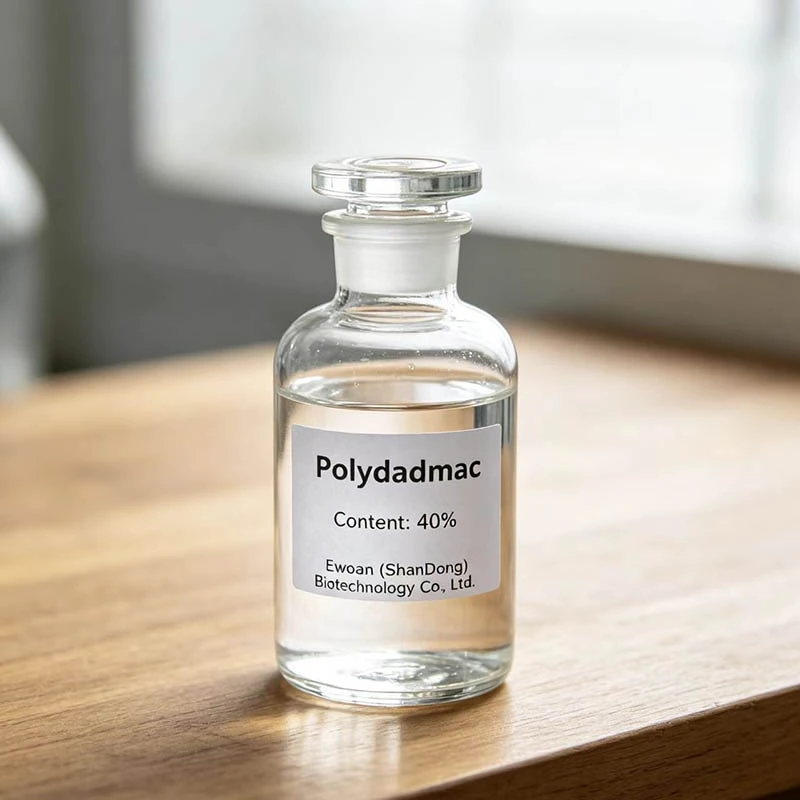
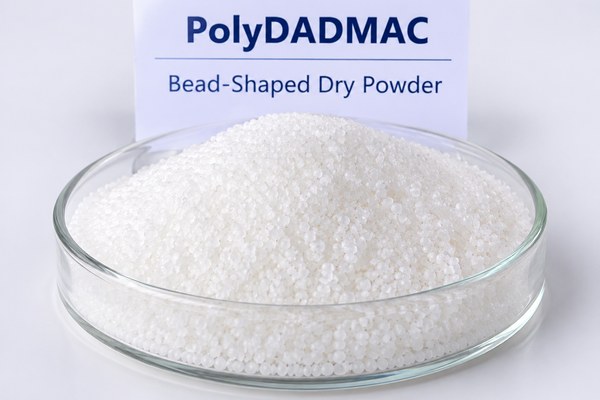
PolyDADMAC for Oilfield Drilling: Key Points for Clay Stabilization & Reservoir Protection
Abstract: Clay stabilization is critical for water-sensitive reservoir drilling.
This article focuses on practical application notes of PolyDADMAC as clay stabilizer, including working scenarios, molecular weight selection tips and compatibility considerations for oilfield operations.
Introduction: Why Clay Stabilization Matters in Modern Drilling
Water-based drilling fluids remain the preferred option for many operators for cost and environmental benefits. However, water-sensitive clay minerals in sandstone reservoirs easily hydrate, swell and migrate once exposed to aqueous filtrate. This near-wellbore formation damage reduces permeability and restricts hydrocarbon flow, which directly limits well productivity.
As low-permeability and horizontal well development grows, engineers are looking for reliable clay control solutions that can be integrated into existing mud systems. PolyDADMAC is widely adopted for this purpose, yet proper application rules are often overlooked.
How PolyDADMAC Controls Clay Damage in Drilling
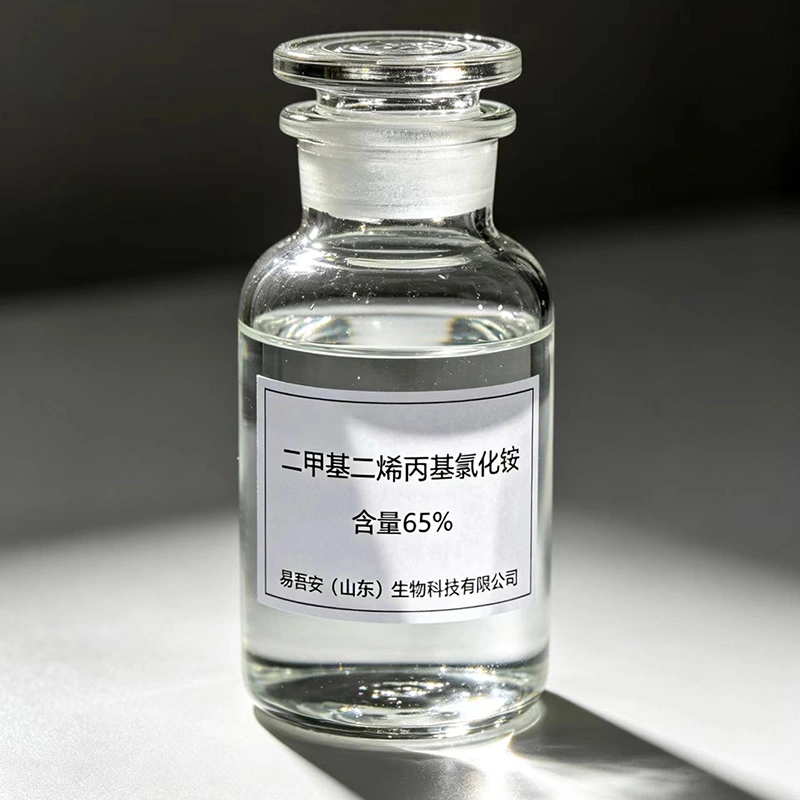
PolyDADMAC carries dense cationic charges along the polymer chain. When added to water-based mud, it adsorbs onto negatively charged clay surfaces.
1.It suppresses clay hydration by compressing the electric double layer;
2.The polymer chain forms a thin protective film, locking clay particles and preventing dispersion and migration.
Compared with traditional inorganic clay stabilizers, its adsorption effect lasts longer and performs better under continuous fluid flushing. It maintains stable inhibition performance within a wide pH window.
Molecular Weight Selection: The Most Important Practical Tip
This is the most frequently discussed point among field engineers.
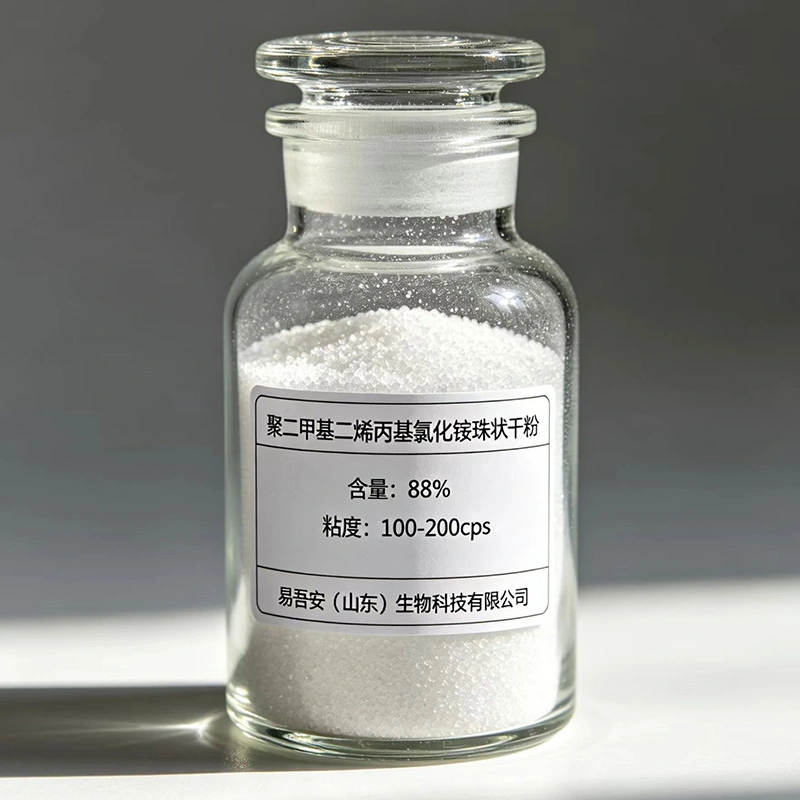
Low-molecular-weight PolyDADMAC: Smaller molecular size, easier to penetrate micro-pores in tight, low-permeability reservoirs. It is suitable for formations with tiny pore throats.
High-molecular-weight PolyDADMAC: Stronger flocculation capacity, better for formations with high clay content and larger pore space.
Application Compatibility with Drilling & Stimulation Fluids
A major advantage of PolyDADMAC is its good compatibility with most common additives in water-based drilling fluid systems.
It can work together with lubricants, filtration control agents and anti-collapse agents. It also shows good compatibility with acidizing and fracturing fluids for subsequent stimulation operations.
It will not destroy the basic rheology and filtration performance of drilling mud when applied at the recommended dosage.
Recommended Application Scenarios
Water-sensitive sandstone reservoirs with high montmorillonite content
Long horizontal section wells, where filtrate invasion depth is larger
Projects replacing oil-based mud with water-based mud for cost and environmental compliance
Continuous operation chains including drilling, completion, acidizing and fracturing
Common Misunderstandings in Field Use
Higher dosage does not mean better inhibition. Excess cationic polymer may bring unwanted side effects to mud properties.
Formulation adjustment is needed for different formation conditions. One fixed formula is not suitable for all blocks.
Outlook: Reservoir Protection as a Standard Upstream Step
The oilfield industry is shifting its mindset: reservoir protection is no longer a secondary task after drilling, but an important part of drilling design.
Reasonable use of clay stabilizers like PolyDADMAC helps preserve natural reservoir permeability, reduce productivity loss and extend stable production time. For operators pursuing cost reduction and stable output, targeted clay control is a high-return investment.
Conclusion
PolyDADMAC has proven its value as a dependable clay stabilizer for water-based drilling. Its performance depends heavily on correct molecular weight selection, dosage control and pre-job formation evaluation.
With well-designed application schemes, it helps engineers minimize clay-related formation damage and maximize the production potential of water-sensitive reservoirs.
We use cookies to offer you a better browsing experience, analyze site traffic and personalize content. By using this site, you agree to our use of cookies. Privacy Policy