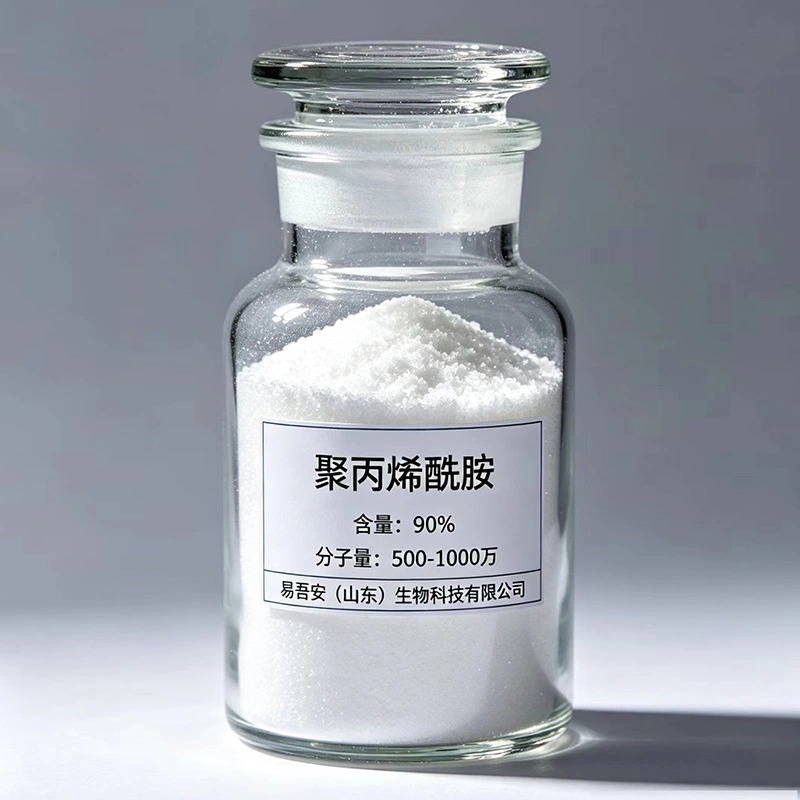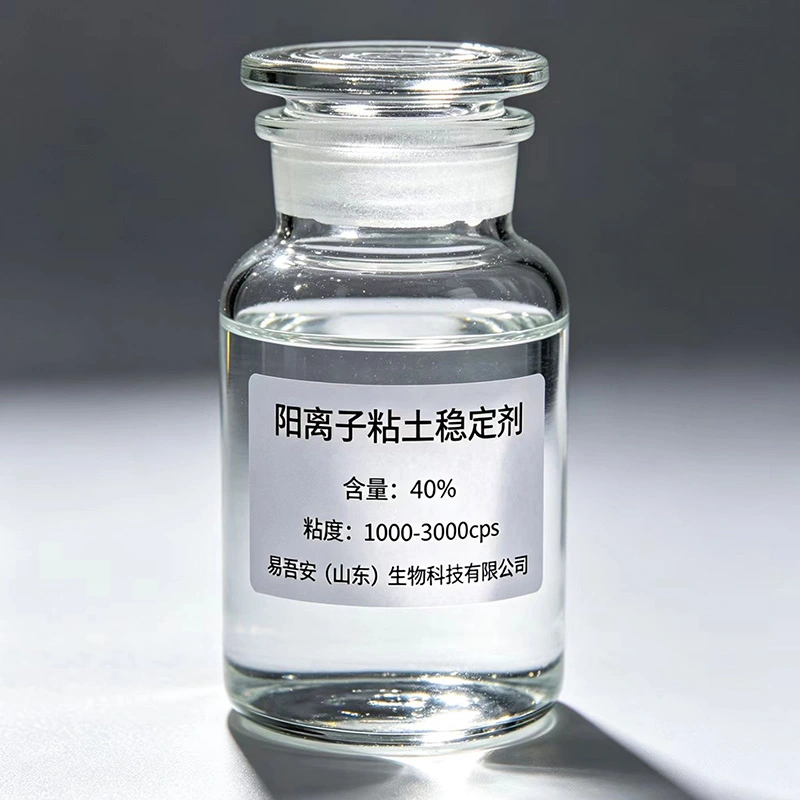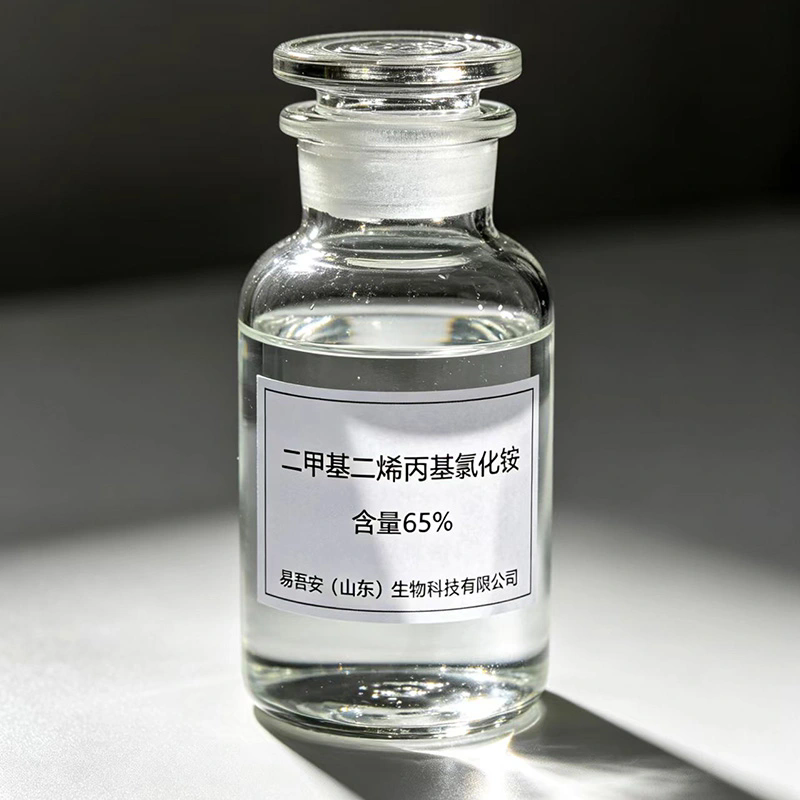
We offer a comprehensive portfolio including DMDAAC, PDMDAAC (liquid and exclusive bead/powder forms), and Polyacrylamide (PAM) series, with an annual production capacity of over 50,000 tons to meet diverse industrial needs.
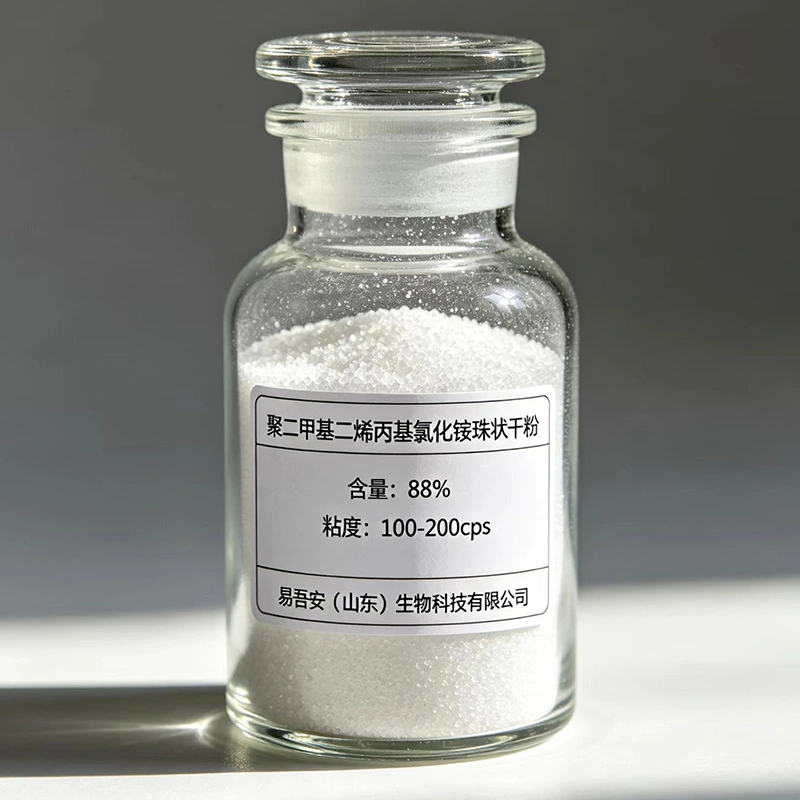
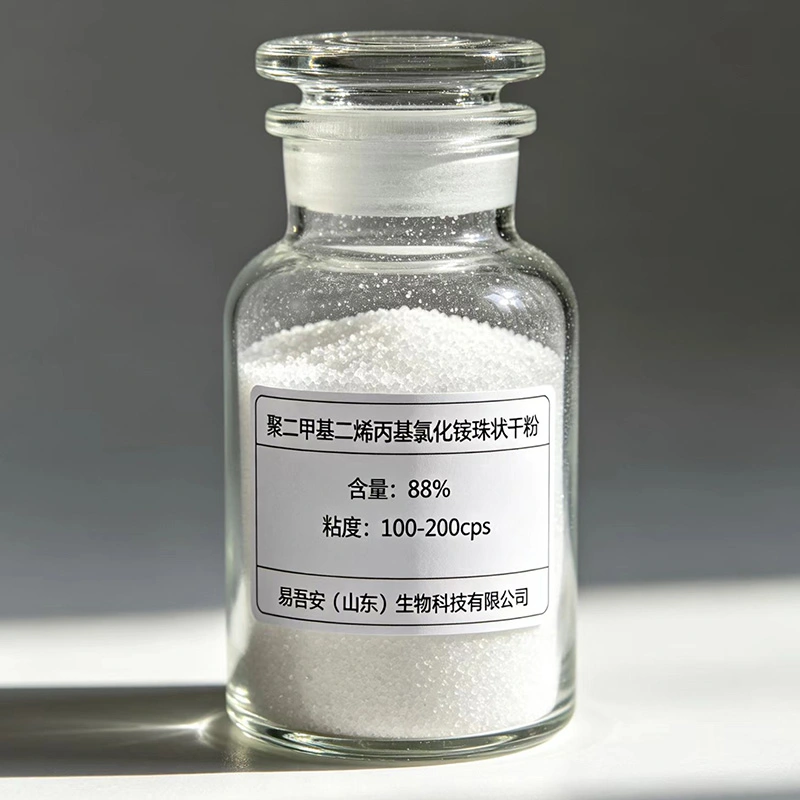
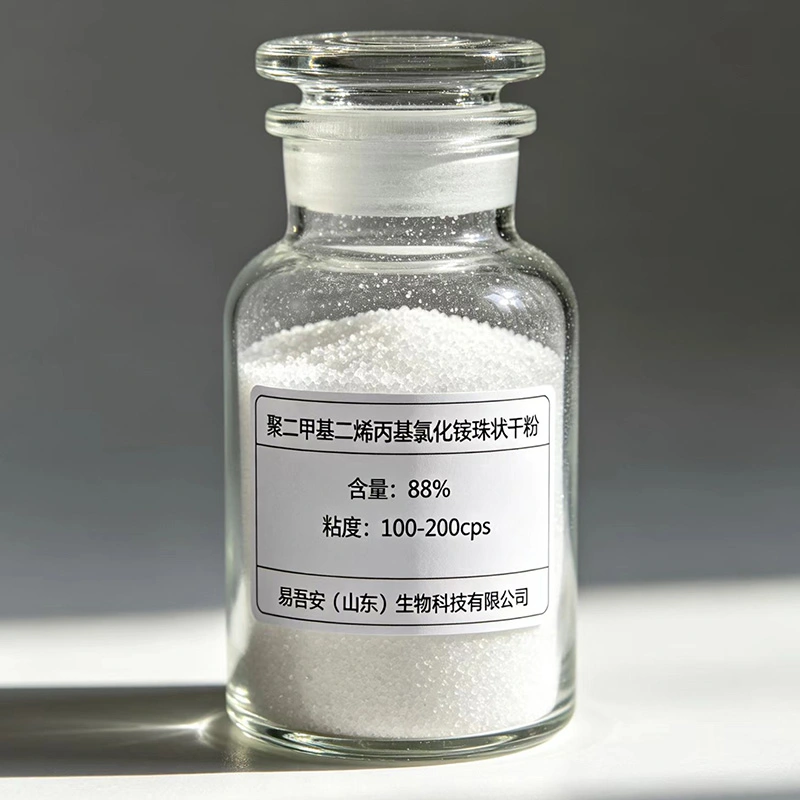
PolyDADMAC beads are a high-solids, spherical, solid quaternary ammonium cationic polyelectrolyte, representing an upgraded solid form of liquid PolyDADMAC. Unlike traditional liquid or powder products, this product features uniform spherical granules and an active ingredient content exceeding 90%. It effectively resolves industry pain points such as the high transportation costs associated with liquids, as well as the dust pollution and moisture-induced clumping common with powders.
While retaining the core characteristics of the PolyDADMAC series—such as chlorine resistance, a wide pH operating range, and non-toxic stability—this product offers the added advantages of higher purity, superior storage stability, safer handling, and lower overall costs.
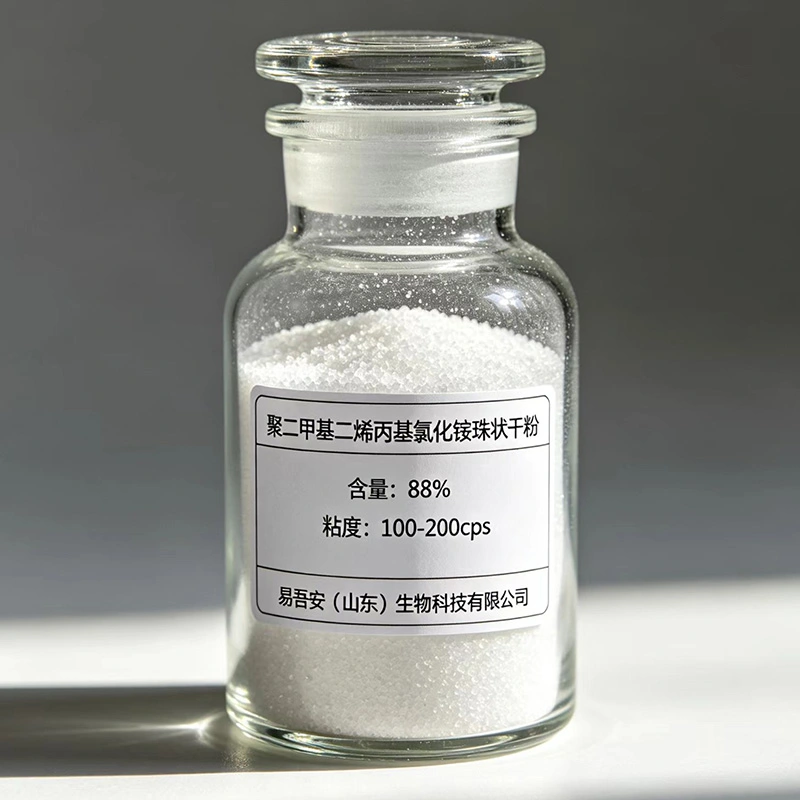
| Code Item | Appearance | Solid content(%) | Particle size (mm) | Intrinsic viscosity (dl/g) | Rotary viscosity |
| 001 | White or slightly yellowish transparent Beads particles | ≥88 | 0.15-0.85 | >1.2 | >200CPS |
| 002 | ≥88 | 0.15-0.85 | ≤1.2 | ≤200cps |
NOTE: The test condition of rotary viscosity: the concentration of PolyDADMAC is 10%.
1.1 Chemical Registration Information
Standard Chemical Name: 2-Propen-1-aminium, N,N-dimethyl-N-propenyl-, chloride homopolymer
Common Aliases: PolyDADMAC, PolyDMDAAC, PDADMAC, PDMDAAC, Polyquaternium
CAS Number: 26062-79-3
Molecular Formula: (C₈H₁₆NCl)n
Product Category: Strongly cationic linear polymeric polyelectrolyte
1.2 Key Physicochemical Parameters
Bulk density is approximately 0.72 g/cm³, with a decomposition temperature of 280--300°C, indicating excellent thermal stability. Fundamental properties include high water solubility, non-flammability, safety (non-toxicity), strong flocculation capability, and excellent hydrolytic stability. It is insensitive to pH fluctuations and possesses inherent chlorine resistance, making it suitable for a wide range of complex industrial operating conditions.
2.1 High-Solids Polymerization and Granulation Process (Active Content >90%)
PolyDADMAC Beads are produced using an anhydrous concentrated polymerization and bead-forming process, moving away from the high-water-content formulas typical of liquid products. The finished product boasts an active content exceeding 90%, far surpassing the 40%--65% solids content standard of conventional liquid products. For the same dosage of active agent, less material is required and treatment efficiency is higher, achieving both quality improvement and cost reduction at the formulation level.
2.2 Dust-Free Granulation Technology (Suitable for Safety-Conscious Workshops)
A precision temperature-controlled forming process creates a uniform bead structure that is strong, resistant to breakage, and free of fine powder; the entire process—from feeding and dissolution to transport—is dust-free. This eliminates risks associated with airborne dust, equipment dust accumulation, and personnel inhalation, significantly optimizing the workshop environment and meeting modern factory safety and environmental control standards.
2.3 Moisture-Resistance Modification (Enhanced Storage Stability)
Compared to standard powdered PolyDADMAC, the bead structure undergoes surface stabilization modification, significantly enhancing moisture resistance. The product is less prone to caking or moisture-induced degradation during storage, effectively solving issues with moisture-related failure in humid southern climates or coastal port warehouses, making it ideal for long-term stockpiling and ocean freight export.
2.4 Stable Polymerization Formula (Zero Batch-to-Batch Performance Fluctuation)
Fully automated, closed-loop polymerization ensures precise control over molecular weight and cationic charge density. Every batch offers highly consistent flocculation performance, dissolution rates, and chlorine stability—eliminating performance inconsistencies and ensuring the long-term, stable operation of customer production lines.
3.1 Differences in Active Content and Total Cost
Bead-form PolyDADMAC has a solids content of ≥90% with no excess water weight, drastically reducing the per-unit cost of transporting, packaging, and storing the active agent. In contrast, liquid products have high water content; for the same amount of active ingredient, they require larger shipping volumes and incur higher freight costs, resulting in a higher total cost for long-term, large-scale procurement.
3.2 Differences in Storage Life and Stability
Bead-form solid products have a shelf life of up to one year when stored in sealed, dry conditions and exhibit superior resistance to high temperatures and humidity. Liquid products have a relatively shorter shelf life; they tend to become viscous at low temperatures and may slightly degrade at high temperatures, posing a higher risk of loss during long-term stockpiling.
3.3 Differences in Procurement Scenarios
Bead-form products are ideal for long-distance export, long-term stockpiling with price locking, facilities with limited storage space, and factories requiring dust-free operations. Liquid products are better suited for local short-haul distribution, immediate use, and standard water treatment projects involving automated, continuous dosing.
3.4 Differences in Dissolution
Bead-form particles dissolve at a uniform, controllable rate without clumping, allowing for precise concentration adjustment. Liquid products can be dosed directly but have a fixed concentration, making it impossible to flexibly prepare high-concentration solutions or adjust formulations.
Leveraging their high purity, stability, and dust-free safety, PolyDADMAC beads serve key sectors such as water treatment, mining, textiles, papermaking, and personal care products, meeting the needs of precision manufacturing across various industries.
4.1 Flocculation and Purification in Industrial and Municipal Water Treatment
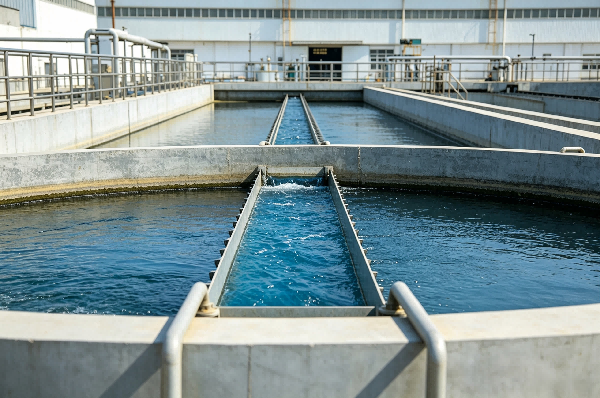
Used as a high-end cationic flocculant, it rapidly neutralizes negatively charged colloids, suspended impurities, and organic matter in water, achieving purification, decolorization, and turbidity reduction. It is suitable for advanced treatment of various industrial and municipal wastewaters, offering low dosage requirements, minimal sludge production, and stable effluent quality.
4.2 Slurry Dewatering in the Mining Industry
Specifically designed for dewatering various types of mineral slurries—including those from coal, taconite, trona, sand and gravel, and titanium dioxide processing—it rapidly promotes the flocculation and settling of mineral particles. This enhances solid-liquid separation efficiency, increases tailings recovery rates, and reduces water treatment costs in the mining sector.
4.3 Formaldehyde-Free Color Fixing in Textile Printing and Dyeing
It can be used to produce eco-friendly, formaldehyde-free color fixing agents that replace traditional formaldehyde-containing auxiliaries. These agents effectively improve fabric color fastness without leaving formaldehyde residues, fully complying with environmental standards for textile exports to Europe and the US, thereby facilitating export compliance for textile enterprises.
4.4 Functional Additives for the Paper Industry
It can be used to prepare specialized conductive coatings for conductive paper. Additionally, it serves as an AKD sizing promoter, optimizing paper formation and surface properties while enhancing the quality of the finished product and production efficiency.
4.5 Fine Chemicals for Personal Care and Household Products
It functions as a conditioning agent, antistatic agent, wetting agent, and emollient aid in personal care and cleaning products. It is safe, non-toxic, and low-irritation, making it suitable for high-end formulations with mild and stable performance.
The bead-form solid product offers controllable dissolution and clear operational procedures; mastering the standard usage maximizes performance while preventing waste or suboptimal results.
5.1 Key Dissolution Characteristics
PolyDADMAC beads exhibit excellent water solubility, dissolving completely in both cold and warm water. The beads dissolve at a steady, uniform rate, avoiding the issues of instant clumping or hard-to-dissolve aggregates often seen with powders. This ensures uniform solution preparation, precise concentration, and highly stable efficacy. It also retains chlorine resistance and stability across a wide pH range, ensuring broad compatibility with various operating conditions.
5.2 Standardized Dissolution Ratios
For standard water treatment applications, a concentration of 0.1%--0.5% is recommended, with adjustments made based on pollution levels and specific process requirements. For fine chemical modification, the concentration can be customized to meet formulation needs, ensuring compatibility with diverse production systems.
5.3 Standard Dosing Procedure
Fill the dissolution tank with clean water and start low-speed agitation. Slowly and evenly add the beads, continuing to stir until they are completely dissolved with no residual particles. Allow the solution to stand for maturation before pumping it to the process dosing point. Maintain low-speed agitation throughout the process to avoid high-speed shear forces that could damage the molecular structure, thereby preserving flocculation and modification performance.
5.4 Contraindications and Precautions
Avoid direct contact with strong oxidizing agents and do not mix directly with anionic chemicals, as this may cause the product to lose effectiveness. It is recommended to use the prepared working solution within the same day; long-term storage may slightly affect activity. Store in a dry, sealed environment to prevent moisture absorption and clumping.
6.1 Standardized Export Packaging Specifications
As an original manufacturer, Ewooan caters to the needs of global buyers—including bulk purchasing, inventory stockpiling, and long-term partnerships—across packaging, storage, logistics, production capacity, and after-sales service.
Standard packaging options include 25kg kraft paper bags with waterproof inner liners and 1000kg woven bulk bags (FIBCs) with waterproof liners. The packaging is sealed to prevent moisture and damage, making it suitable for long-distance ocean and land transport; customized packaging and private labeling services are available upon request.
6.2 Storage, Transport, and Shelf Life
PolyDADMAC beads are classified as non-hazardous goods, ensuring unrestricted transport and streamlined customs clearance. They should be stored in a sealed container within a cool, dry warehouse, away from strong oxidizing agents. With a shelf life of one year under standard storage conditions, the product meets the requirements for bulk stockpiling and long-term inventory management.
6.3 Production Capacity and Delivery Assurance
With in-house automated granulation production lines, we maintain ample capacity for mass-producing PolyDADMAC beads. We support immediate shipment of stock, scheduling for large-volume orders, and long-term strategic partnerships with price locking. By eliminating middlemen markups, we ensure stable and controllable delivery timelines.
6.4 Export Support Services
We provide a full suite of export documentation—including quality inspection reports, customs declaration materials, and certificates of origin—compliant with customs clearance standards worldwide. Additionally, we offer free sample testing, guidance on product selection, and on-site technical support to help clients precisely match the product to their operating conditions and minimize trial-and-error costs.
6.5 Core Procurement Cost Advantages
The high-solid-content bead formulation significantly reduces logistics and warehousing costs. It requires lower dosage to achieve the same treatment results, thereby substantially lowering the client's overall production and operational costs over the long term. This makes it a highly cost-effective choice for long-distance export procurement and large-scale industrial production.
Address
Wanhong Plaza, Jinan City, Shandong Province, China
Tel