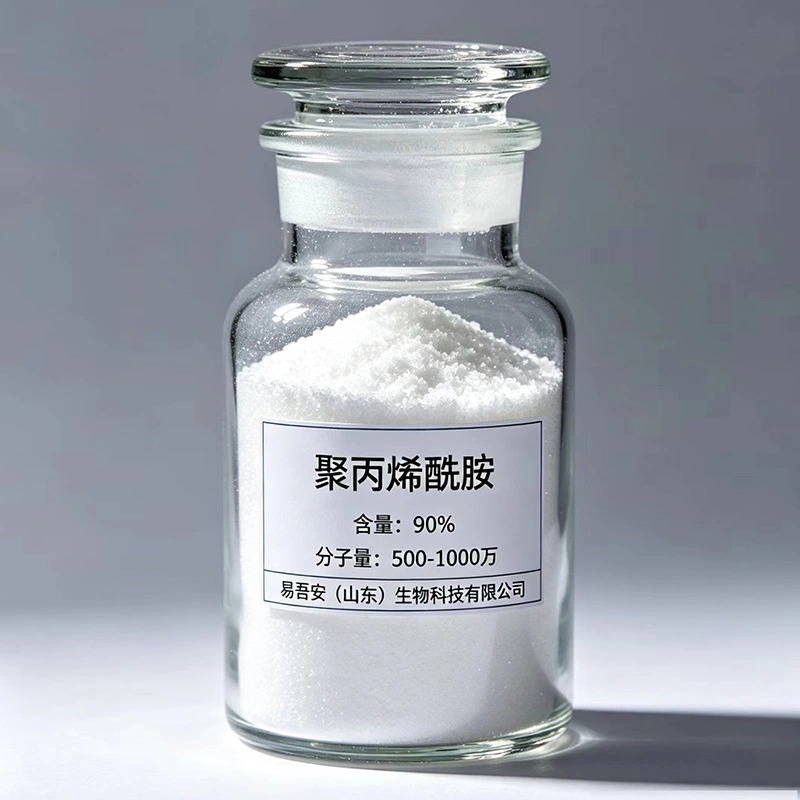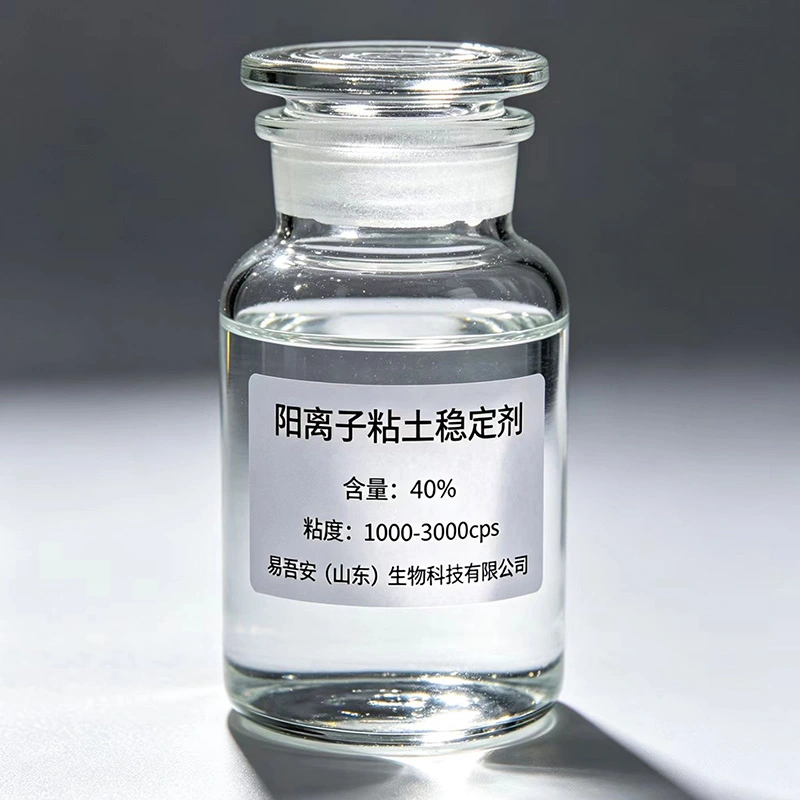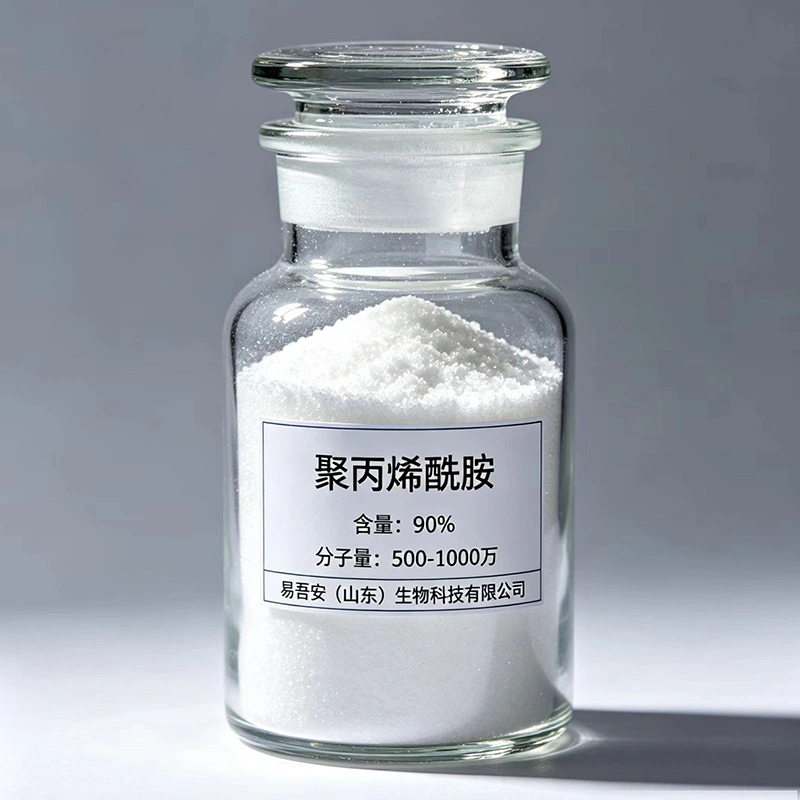
We offer a comprehensive portfolio including DMDAAC, PDMDAAC (liquid and exclusive bead/powder forms), and Polyacrylamide (PAM) series, with an annual production capacity of over 50,000 tons to meet diverse industrial needs.
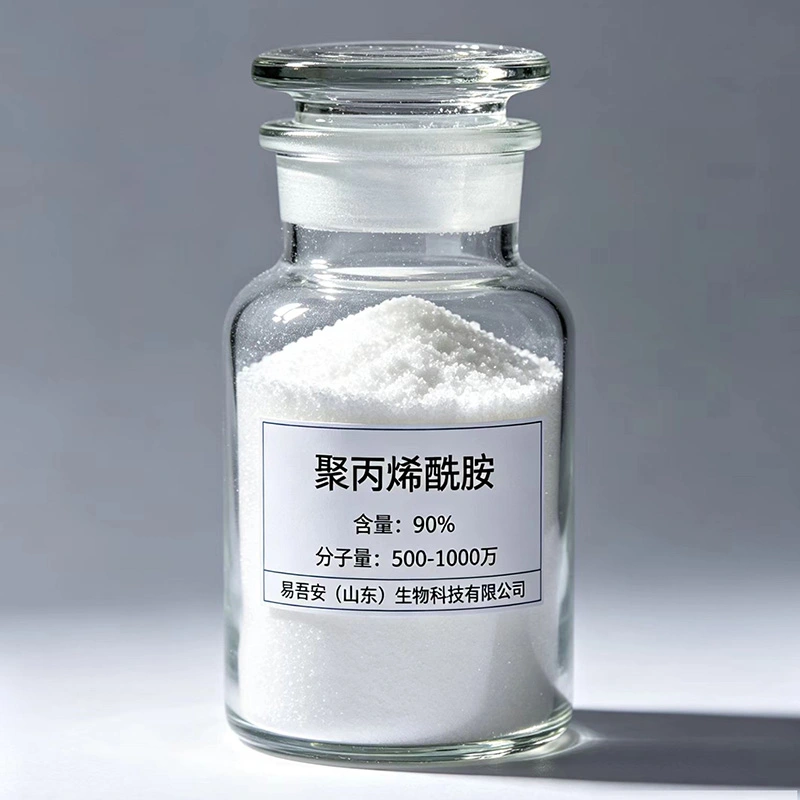
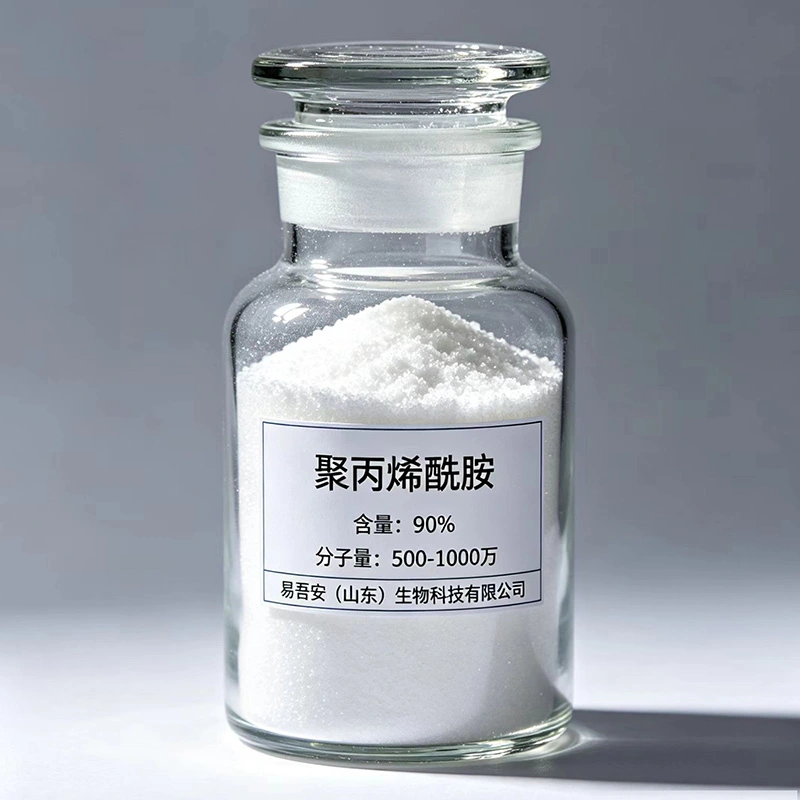
Anionic Polyacrylamide flocculant powder is a water-soluble, linear high-molecular-weight polymer synthesized via the copolymerization of acrylamide and sodium acrylate. The finished product is a white or slightly yellowish free-flowing powder with a solid content of ≥90%, ensuring a significantly higher proportion of active ingredients compared to liquid flocculants. It covers a molecular weight range of 6 million to 30 million, with the degree of hydrolysis precisely adjustable between 7% and 40% to suit varying water qualities, suspended solid concentrations, and treatment processes.
1.1 Ultra-High Molecular Weight
Spanning an ultra-wide molecular weight range of 6 million to 30 million, the product features intact long molecular chains and abundant active sites. Compared to conventional flocculants, it offers superior particle bridging capabilities, rapidly aggregating fine suspended particles into stable flocs that are large, dense, and resistant to hydrodynamic shear. This effectively eliminates issues such as the suspension of fine particles or incomplete sedimentation.
1.2 High Solid Content & Customizability
The powder maintains a stable solid content of ≥90%; with a high concentration of active ingredients and no excess solvent, its treatment efficiency far surpasses that of liquid flocculants. It supports customization across a 7%--40% hydrolysis gradient, allowing for precise selection based on particle size, concentration, and pH levels. This adaptability meets diverse water treatment process requirements, avoiding the poor compatibility and inconsistent performance often associated with generic agents.
1.3 Wide pH Compatibility
Specifically designed for water environments ranging from neutral to strongly alkaline (pH 7--14), it maintains stable flocculation performance in alkaline industrial wastewater, high-hardness mine water, and high-turbidity surface water without loss of efficacy or failure. It overcomes the limitations of conventional flocculants, which often lack alkali resistance and have narrow operating ranges.
1.4 Rapid Cold-Water Dissolution
It features excellent water solubility, dissolving completely in cold water at ambient temperatures without the need for heating. It dissolves uniformly without clumping or agglomeration, making it compatible with automated dosing equipment; this simplifies on-site preparation and enhances the overall operational efficiency of wastewater treatment plants.
1.5 Powder Formulation
Supplied as a high-purity dry powder, it eliminates the excess transport costs associated with liquid products. It offers superior storage stability—resisting moisture and degradation when sealed—and has a shelf life of up to two years. It is ideal for bulk stockpiling and long-distance, cross-regional supply, offering exceptional cost-efficiency in storage and transportation.
2.1 Distinctive Mechanism
Unlike traditional inorganic flocculants (such as polyaluminum chloride, aluminum sulfate, or polyferric sulfate) that rely primarily on simple charge neutralization, APAM operates through a synergistic multi-mechanism approach centered on polymer adsorption and bridging. This results in faster floc formation, more stable floc structures, and greater resistance to hydraulic shear, yielding clearer and more consistent effluent quality.
2.2 Minimal Dosage Required
The product offers extremely high utilization efficiency; achieving the same treatment results requires only one-fiftieth of the dosage of traditional inorganic flocculants, significantly reducing chemical consumption costs. Field tests in municipal wastewater treatment showed that a dosage of 0.25 mg/L in the primary sedimentation tank achieved a 66% suspended solids removal rate and a 23% BOD removal rate. In the secondary sedimentation tank, a dosage of 0.3 mg/L achieved 87% suspended solids removal and 91% BOD removal, while phosphorus removal efficiency rose from 35% to 91%—demonstrating significant improvements in quality and cost-efficiency.
2.3 Broad-Spectrum Compatibility
Specifically designed to handle various types of wastewater—including those with coarse particles, high concentrations, positively charged suspended solids, and neutral-to-alkaline pH levels—this product offers a one-stop solution for diverse scenarios such as industrial discharge, municipal sewage treatment, drinking water purification, mineral processing, oilfield operations, papermaking, and sugar refining. Its versatility allows for multiple applications, helping factories reduce the variety of chemical products purchased and alleviate inventory management pressure.
2.4 Safety, Environmental Friendliness, and Compliance
Anionic Polyacrylamide Flocculant Powder is non-toxic, harmless, and chemically stable. Its degradation products in water cause no secondary pollution, meeting both domestic and international environmental discharge standards. It can be safely used for drinking water pre-treatment, industrial circulating water treatment, and effluent compliance management, supporting environmentally compliant production and meeting quality requirements for export orders.
3.1 Industrial Wastewater Treatment
Widely compatible with alkaline, high-concentration wastewater from industries such as iron and steel, electroplating, metallurgy, coal washing, fine chemicals, and electronics manufacturing. It rapidly settles suspended impurities, metal particles, and colloidal contaminants, reducing turbidity to achieve quick clarification, recycling, and compliant discharge.
3.2 Municipal Sewage Treatment
Used in primary and secondary sedimentation stages of municipal sewage treatment. It efficiently removes suspended solids, BOD (organic matter), and phosphate pollutants, increasing treatment capacity, shortening sedimentation time, and improving sludge settling ratios to ensure stable, compliant discharge.
3.3 Drinking Water Purification
Suitable for the clarification and pre-treatment of high-turbidity river water and surface water. It rapidly adsorbs silt and fine impurities, reducing raw water turbidity without leaving residual pollution, ensuring safe and compliant pre-treatment that integrates seamlessly with waterworks purification processes.
3.4 Mineral Processing
Used for coal slime water sedimentation, tailings slurry dewatering, and mineral separation/purification. It accelerates solid-liquid separation in slurries and boosts mineral recovery rates, while also enabling the clarification and recycling of tailings water, thereby reducing water costs and promoting water conservation and consumption reduction in mining operations.
3.5 Oilfield Development Applications
It serves as an enhanced oil recovery (EOR) agent and drilling fluid additive. By leveraging properties such as thickening, drag reduction, and flocculation, it optimizes fluid performance, reduces extraction resistance, and boosts crude oil recovery rates, meeting the comprehensive process requirements of oilfield operations.
3.6 Papermaking Industry Applications
It functions as a retention aid, drainage aid, and paper strengthening agent. It improves pulp fiber retention, minimizes the loss of fines, and optimizes sheet uniformity. Additionally, it enhances both dry and wet paper strength, improves the quality of the finished product, and reduces raw material waste.
3.7 Sugar Industry Clarification
Used as a specialized clarifying agent for sugar juice, it rapidly flocculates impurities, pigments, and suspended particles. This purifies the juice, increases clarity and the purity of the final sugar product, and optimizes the efficiency of the sugar refining process.
4.1 Core Mechanism: Polymer Adsorption and Bridging
APAM features ultra-long linear molecular chains densely populated with polar amide groups and active carboxylic acid groups. A single molecular chain can simultaneously adsorb multiple suspended particles, forming stable polymer bridges between them. This aggregates countless fine particles into large, dense flocs. These floc structures are resistant to hydrodynamic shear and do not easily break apart, resulting in sedimentation performance far superior to conventional agents.
4.2 Auxiliary Mechanism: Electrostatic Charge Neutralization
The molecule carries a large number of anionic carboxylic acid groups, allowing it to actively neutralize positively charged suspended particles and metallic colloidal impurities in the water. By eliminating electrostatic repulsion between particles and destabilizing the colloidal system, it promotes rapid particle aggregation, laying the groundwork for subsequent sedimentation and separation.
4.3 Efficiency Enhancement Mechanism: 3D Net-like Entrapment and Sweeping
Upon dissolution, APAM forms a three-dimensional polymer network structure within the water. As flocs settle, they actively entrap and sweep up residual fine impurities and suspended particles—capturing ultrafine suspended matter that conventional agents fail to settle—thereby comprehensively improving water clarity and the thoroughness of solid-liquid separation.
4.4 Additional Mechanisms: Fluid Thickening and Drag Reduction
Anionic Polyacrylamide Flocculant Powder possesses excellent fluid modification capabilities. Even at low dosage rates, it can reduce fluid frictional resistance by 50%--80% while enabling controlled, uniform thickening. It combines multiple functions—such as flocculation for water treatment and drag reduction/flow stabilization for industrial fluids—making it suitable for diverse industrial applications.
5.1 Standardized Packaging Specifications
Double-layer protective packaging is utilized: an inner moisture-proof polyethylene bag and an outer wear-resistant, plastic-lined kraft paper bag. Each bag has a net weight of 25 kg. The packaging is tightly sealed to prevent moisture ingress and leakage, effectively avoiding clumping caused by humidity during transport and storage. Options range from bulk container shipments to small-batch sample orders.
5.2 Proper Storage Conditions
Store in a sealed container within a cool, dry, and well-ventilated standard warehouse. Strictly avoid exposure to rain, damp flooring, and direct sunlight; keep away from high-temperature heat sources and incompatible materials such as strong oxidizers to ensure the long-term stability of the powder's activity and physicochemical properties.
5.3 Shelf Life and Transport Standards
Under standard storage conditions, the product has a shelf life of up to two years. It is non-toxic, non-corrosive, and non-flammable/non-explosive; as it is not classified as a hazardous chemical, it can be transported via standard logistics channels. Domestic land transport, sea freight, and cross-border shipping all proceed through customs smoothly, ensuring convenient and efficient delivery.
Q1: What types of wastewater is anionic polyacrylamide primarily suited for?
Anionic Polyacrylamide Flocculant Powder is specifically designed for neutral to alkaline water (pH 7--14). It is ideal for industrial wastewater, mine water, and municipal sewage characterized by coarse suspended particles, high concentrations, and positively charged particles. It is not suitable for highly acidic wastewater; for acidic conditions, it should be used with appropriate pH adjusters or paired with a different ionic type of PAM.
Q2: Why does APAM outperform traditional inorganic flocculants?
Traditional inorganic flocculants rely solely on charge neutralization, resulting in fine, fragile flocs and slow settling. In contrast, APAM operates primarily through polymer bridging, combined with charge neutralization and sweep-flocculation mechanisms. This produces large, dense flocs that settle rapidly. Furthermore, the required dosage is only 1/50th that of inorganic agents, leading to lower overall treatment costs and more consistent effluent quality.
Q3: How do I select the right APAM grade for specific operating conditions?
For low-turbidity surface water and drinking water purification, choose grades with low-to-medium degrees of hydrolysis. For high-concentration alkaline industrial wastewater or coal washing and mineral processing wastewater, select grades with medium-to-high degrees of hydrolysis and high molecular weights. For phosphorus removal and COD reduction in municipal secondary clarifiers, high-hydrolysis grades are preferred; manufacturers can also customize molecular weight and hydrolysis degrees to meet specific needs.
Q4: Does the dry powder require heating to dissolve? What is the appropriate concentration?
No heating is required; it dissolves completely in cold water at ambient temperature. The standard on-site preparation concentration is 0.1%--0.3%. The solution should be stirred thoroughly before dosing to avoid issues such as localized chemical accumulation and uneven flocculation caused by adding high-concentration solutions directly.
Q5: Will moisture exposure during storage affect performance?
Slight clumping due to moisture can be broken up and dissolved without affecting core performance. However, prolonged exposure to sunlight, high temperatures, or moisture can cause polymer chain degradation and reduced activity, thereby impairing flocculation efficiency. Strict adherence to sealed, dry storage protocols is recommended to ensure product stability.
Address
Wanhong Plaza, Jinan City, Shandong Province, China
Tel